
3/7-4
Eksport:  PDF
PDF
PDF-
Generell informasjon
Generell informasjon Attributt Verdi Brønnbane navn Offisielt navn på brønnbanen ihht Sokkeldirektoratets retningslinjer for betegnelse på brønner og brønnbaner.3/7-4Type Brønnbanetype. Lovlige verdier: EXPLORATION, DEVELOPMENT, OTHER (se 'Formål' for mer informasjon)EXPLORATIONFormål Endelig klassifisering av brønnbanen.
Lovlige verdier for letebrønnbaner: WILDCAT, APPRAISAL, WILDCAT-CCS, APPRAISAL-CCS.
Lovlige verdier for utvinningsbrønnbaner:
OBSERVATION, PRODUCTION, INJECTION, INJECTION-CCS, OBSERVATION-CCS.
Lovlig verdier for andre brønnbaner:
SOIL DRILLING (boring ifm trase og andre grunnundersøkelser som gjøres for å undersøke grunnforholdene i forkant av plassering av innretninger),
SHALLOW GAS (undersøke grunn gass før første boring på lokasjon),
PILOT (undersøke geologi og væskekontakter for plassering av hovedbrønnbanen),
SCIENTIFIC (bores ihhtLov om vitenskapelige undersøkelser),
STRATIGRAPHIC (bores ihht Petroleumsloven §2-1).WILDCATStatus Status for brønnbanen. Lovlige verdier:
BLOWOUT: Det har vært blowout i brønnen.
CLOSED: Utvinningsbrønnbane som er stengt for produksjon/injeksjon i kortere eller lengre periode. Statusen er også brukt på ferdig borete brønnbaner, der månedlig produksjon/injeksjon ikke har blitt rapportert enda.
DRILLING: Brønnen er i borefasen. Kan være i aktiv boring, logging, testing eller plugging.
JUNKED: Boringen ble avsluttet pga tekniske problemer,
P&A: For letebrønnbane: brønnbanen er plugget og forlatt, og kan ikke re-entres for videre bruk. For utvinningsbrønnbane: produksjon/injeksjon er avsluttet og brønnen er plugget. Brønnhodet er fjernet eller på annet vis gjort utilgjengelig for nye brønnoperasjoner.
PLUGGED: Brønnbane som er plugget, men øvre deler av brønnbanen kan brukes til å bore nye sidesteg mot nye boremål.
PRODUCING: Det ble produsert fra brønnbanen ved operatørens siste månedlige innrapportering til Sokkeldirektoratet.
INJECTING: Det ble injisert i brønnbanen ved operatørens siste månedlige innrapportering til Sokkeldirektoratet.
PREDRILLED: Øverste del av brønnbanen er boret, vanligvis som del av en topphull-kampanje som kan inkludere flere brønnbaner.
RE-CLASS TO DEV: Letebrønnbane som er reklassifisert til en utvinningsbrønnbane med eget navn.
RE-CLASS TO TEST: Letebrønnbane som er reklassifisert til testproduksjon med eget navn.
SUSPENDED: Brønnbane der boringen er midlertidig stoppet. Rettighetshaverne planlegger å fortsette boringen på et senere tidspunkt.
WILL NEVER BE DRILLED: Brønnbane som er registrert med navn og WellID av Sokkeldirektoratet, men som av ulike årsaker ikke vil bli boret.
ONLINE/OPERATIONAL: Brønnbanen er pågående, men ikke ferdigstilt, kan være operasjoner som, boring, seksjonsboring, logging, testing, plugging, klargjøring for produksjon/injeksjon eller midlertidig stans i forbindelse med operasjonene.
P&AFaktakart i nytt vinduHovedområde Navn på området på norsk koninentalsokkel hvor brønnbanen ligger. Lovlige verdier: BARENTS SEA, NORWEGIAN SEA, NORTH SEA.NORTH SEAFelt Navn på feltet som brønnbanen er relatert til.Funn Navn på funnet som brønnbanen er relatert til.Brønn navn Offisielt navn på brønnen som brønnbanen tilhører ihht Sokkeldirektoratets retningslinjer for betegnelse på brønner og brønnbaner.3/7-4Seismisk lokalisering Brønnbanens lokalisering (ved spud-posisjon) på seismiske linjer. SP: Skuddpunkt.EL 8201 - 219 SP 220Boreoperatør Navn på rettighetshaver som på vegne av den aktive utvinningstillatelsen starter boreoperasjonen. Dette tilsvarer vanligvis operatørselskapet for den aktuelle utvinningstillatelsen.A/S Norske ShellBoretillatelse Boretillatelsesnummer sammen med versjon av boretillatelsen som angitt i boretillatelsen gitt av Sokkeldirektoratet.619-LUtvinningstill. ved brønnhodeposisjon Offisielt navn på utvinningstillatelsen som brønnbanen ble boret eller planlegges boret ut fra (brønnhodeposisjonen).Utvinningstill. for boremål Dette tilsvarer den aktive utvinningstillatelsen for brønnbanens planlagte boremål. Utvinningstillatelsen for boremålet kan være en annen enn utvinningstillatelsen brønnbanen ble boret ut fra.Boreinnretning Sokkeldirektoratets navn på innretningen som brønnbanen ble boret fra.Boredager Antall dager fra borestart til boreslutt.126Borestart Dato borekrona trengte gjennom jordskorpa. For sidesteg: Datoen ny formasjon blir boret, se også utboringsdyp.20.09.1989Boreslutt Letebrønner fra flyttbare innretninger:
For flytende innretninger – dato når ankerhåndteringen startet.For oppjekkbare innretninger – dato for oppstart av nedjekking.
Letebrønner fra faste innretninger og alle utvinningsbrønner:
Dato for når totalt dyp er nådd og siste foringsrør, casing eller screen er satt. Ved umiddelbar plugging av brønnbanen, tilsvarer boreslutt datoen siste plugg er satt.23.01.1990Frigitt dato Dato for når rådata som er innrapportert til myndighetene fra brønnen ikke lenger er undergitt taushetsplikt. Normalt ca 2 år etter boreslutt. Kan være tidligere hvis arealet for utvinningstillatelsen er tilbakelevert.23.01.1992Publiseringsdato Dato kvalitetskontroll av informasjon om brønnbanen ble ferdig, slik at den kan publiseres på internett som en 'Well Data Summary Sheet brønnbane', dvs. med mer informasjon tilgjengelig enn for andre brønnbaner.19.10.2006Opprinnelig formål Formålet med brønnbanen definert før borestart.Lovlige verdier for letebrønnbaner: WILDCAT, APPRAISAL, WILDCAT-CCS, APPRAISAL-CCS. Eksempler på lovlige verdier for utvinningsbrønnbaner: OBSERVATION, PRODUCTION, INJECTION.WILDCATGjenåpnet Status om brønnbanen er gjenåpnet (YES) eller ikke (NO). Når en teller antall brønnbaner på norsk sokkel, teller en bare de som ikke er gjenåpnet (NO).NOInnhold For letebrønnbaner, funn status.
Lovlige verdier: DRY, SHOWS (spor av hydrokarboner), GAS, GAS/CONDENSATE, OIL eller OIL/GAS.
SHOWS (GAS SHOWS, OIL SHOWS eller OIL/GAS SHOWS) er oppdaget som fluorescerende kutt (organisk ekstrakt), lukt av petroleum, eller synlig belegg på borekaks eller borekjerner, eller som økte gassavlesninger i slamloggerens detekteringsutstyr.
Lovlige verdier for WILDCAT-CCS og APPRAISAL-CCS: WATER
For utvinningsbrønnbaner, type produsert eller injisert fluid.
Lovlige verdier: WATER, CUTTINGS, NOT AVAILABLE, OIL, GAS/CONDENSATE, OIL/GAS, CO2, GAS, WATER/GAS, NOT APPLICABLE.GAS/CONDENSATEFunnbrønnbane Indikator som forteller om brønnbanen påviste et nytt funn. Lovlige verdier: YES, NO. For brønnbaner der resultatet ikke er pressemeldt eller på annet vis avklart, blir «NO» benyttet.YES1. nivå med hydrokarboner, alder Alder på litostratigrafisk enhet, 1. nivå, hvor petroleum er blitt påvist. Eksempler på lovlige verdier: CRETACEOUS, EARLY CRETACEOUS, LATE JURASSIC, EOCENE. Se Sokkeldirektoratets bulletins for mer informasjon.MIDDLE JURASSIC1. nivå med hydrokarboner, formasjon. Navn på litostratigrafisk enhet, 1. nivå, hvor hydrokarboner er blitt påvist. Vises bare på brønner som er frigitt. Eksempler på lovlige verdier: BASEMENT, COOK FM, EKOFISK FM, HEIMDAL FM, SANDNES FM, SOGNEFJORD FM, TARBERT FM, BRENT GP. Se Sokkeldirektoratets bulletins for mer informasjon.SANDNES FM2. nivå med hydrokarboner, alder Alder på litostratigrafisk enhet, 2. nivå, hvor petroleum er blitt påvist. Eksempler på lovlige verdier: CRETACEOUS, EARLY CRETACEOUS, LATE JURASSIC, EOCENE.MIDDLE JURASSIC2. nivå med hydrokarboner, formasjon Navn på litostratigrafisk enhet, 2. nivå, hvor hydrokarboner er blitt påvist. Vises bare på brønner som er frigitt.Eksempler på lovlige verdier: BASEMENT, COOK FM, EKOFISK FM, HEIMDAL FM, SANDNES FM, SOGNEFJORD FM, TARBERT FM, BRENT GP.BRYNE FMAvstand, boredekk – midlere havflate [m] Avstand i meter mellom boredekk og midlere havnivå (RKB).25.0Vanndybde ved midlere havflate [m] Dybde i meter mellom midlere havflate og havbunn.66.0Totalt målt dybde (MD) [m RKB] Målt lengde av brønnbanen fra boredekket til bunnen av brønnbanen ("driller`s depth").3723.0Totalt vertikalt dybde (TVD) [m RKB] Vertikalt dybde fra dypet ved slutten av brønnbanen til boredekket. Vises bare på brønner som er frigitt. Referert til som sant vertikalt dyp (TVD: TrueVerticalDepth).3721.0Maks inklinasjon [°] Maksimum avvik, i grader, fra vertikal brønnbane. Vises bare på brønner som er frigitt.7.3Temperatur ved bunn av brønnbanen [°C] Estimert temperatur ved bunnen av brønnbanen. Vises bare på brønner som er frigitt. Se beskrivelse.136Eldste penetrerte alder Alder (iflg. Geologic Time Scale 2004 by F. M. Gradstein, et al. (2004)) til den eldste formasjonen det er blitt boret gjennom. Kan avvike fra alder ved TD for eksempel i avviksbrønner. Eksempler for lovlige verdier: CRETACEOUS, EARLY CRETACEOUS, LATE JURASSIC, EARLY PERMIAN, EARLY TRIASSIC, EOCENE.LATE PERMIANEldste penetrerte formasjon Navn på den eldste litostratigrafiske enheten som brønnbanen har penetrert. Vises bare på brønner som er frigitt. I de fleste brønnbaner er dette formasjonen eller gruppen påtruffet i bunnen av brønnbanen. Kan avvike fra formasjonen eller gruppen ved TD for eksempel i brønnbaner som er boret med høy avvik eller gjennom forkastninger. Eksempler på lovlige verdier: AMUNDSEN FM, BALDER FM, BASEMENT, BLODØKS FM, BRYNE FM, BURTON FM, COOK FM, DRAKE FM, DRAUPNE FM, EKOFISK FM, SHETLAND GP.ZECHSTEIN GPGeodetisk datum Referansesystem for koordinater. Eksempel på lovlige verdier: ED50.ED50NS grader Geografisk koordinat for brønnhode, nord-sør grader.56° 24' 15.6'' NØV grader Geografisk koordinat for brønnhode, øst-vest grader.4° 14' 22.24'' ENS UTM [m] Universal Transverse Mercator koodinat for brønnhode, nord-sør.6251910.40ØV UTM [m] Universal Transverse Mercator koodinat for brønnhode, øst-vest.576498.02UTM sone Universal Transverse Mercator sone. Eksempel på lovlige verdier: 31, 32, 33, 34.31NPDID for brønnbanen Sokkeldirektoratets entydige nøkkel for brønnbanen.1467 -
Brønnhistorie
GeneralWell 3/7-4 was designed to drill a prospect on the Lulita culmination. The Lulita prospect extends in to Danish waters, and forms part of an elongated, N-S trending, salt induced feature on the western margin of the Søgne Basin. The present structural features were developed during mid Cretaceous time, and closure at Late Cretaceous and Tertiary levels essentially reflects compaction and drape over the Jurassic high. The Jurassic Lulita closure is separated from the area tested by the 3/7-3 well by a faulted saddle, which also is well expressed at Tertiary and Cretaceous levels, providing a vertical closure of some 75 metres. The well had as primary objective to test the hydrocarbon potential of Middle Jurassic sandstones within a structural/stratigraphic trap, and as secondary objective to testing the potential in possible Late Jurassic and Early Cretaceous sandstones, within a structural trap. Additional objectives included testing of Late Cretaceous Chalk, found hydrocarbon bearing in the nearby Harald field, Paleocene/Eocene turbiditic sandstones, and the reservoir quality of the Triassic sequence. The well should drill some 150 m into rocks of Triassic age. Shallow gas could be encountered at 317 to 388 m, at 485, and at 515 m according to seismic anomalies.Operations and resultsWildcat well 3/7-4 was spudded with the semi-submersible installation Hunter on 20 September 1989 and drilled to TD at 3723 m in the Permian Zechstein Group. At 3472.9 m the string was backed off, and a cement kick off plug was set. The hole was sidetracked from 3405 m. The well was drilled with seawater and hi-vis spud mud down to 622 m, with KCl polymer from 622 m to 3473 m, and with seawater/polymer from 3473 m to TD. No shallow gas was encountered.A 160 m hydrocarbon column from top Ula Formation and down to 3572 m in the Bryne Formation was found from well-logs, core shows, and RFT pressure gradients. Strong shows were recorded throughout the reservoir. Below the ODT shows died out, and were not seen below 3600 m. The RFT pressures indicated a light condensate-type fluid gradient of 0.39 bar/10m in the hydrocarbon-bearing zone. The secondary and additional objective levels were evaluated: A 29 m thick sequence of Maureen Formation sandstone was encountered in the Tertiary, no reservoir quality sands or chalk was found in the Late Jurassic and Cretaceous, and the Triassic was missing. Weak shows were recorded in the Maureen sandstone.Two segregated RFT fluid samples were obtained. The first (No. 1) from 3564.5 m contained gas, condensate and water, whilst the second (No. 2) from 3442.5 m contained gas and water only. A total of 123.5 m conventional core was recovered in eight cores in the interval 3416 m to 3574 in the Ula and Bryne Formations. Core no 1 was cut in the first hole, the remaining seven cores were cut in the sidetrack.The well was permanently abandoned on 23 January 1990 as a gas/condensate discovery.TestingTwo DST tests were performed in this well. Test no 1A in the interval 3473 to 3537 m produced 665 Sm3/d liquid hydrocarbons of 0.804 g/cm3 and 884450 Sm3 gas through a 19 mm choke. The Gas/Liquid ratio was 1330 Sm3/Sm3. Test no 1B in the interval 3440 to 3537 m produced 611 Sm3/d of 0.796 g/cm3 liquid and 838292 Sm3 gas through a 19 mm choke. The GLR was 1372 Sm3/Sm3. The gas gravity (air = 1) was 0.72 in both tests. Temperature measurements during the tests gave a reservoir temperature of 131 deg C. -
Borekaks i Sokkeldirektoratet
Borekaks i Sokkeldirektoratet Borekaks tilgjengelig for prøvetaking?YESBorekaks i Sokkeldirektoratet Borekaksprøve, topp dybde [m]Borekaksprøve, bunn dybde [m]630.003721.00 -
Borekjerner i Sokkeldirektoratet
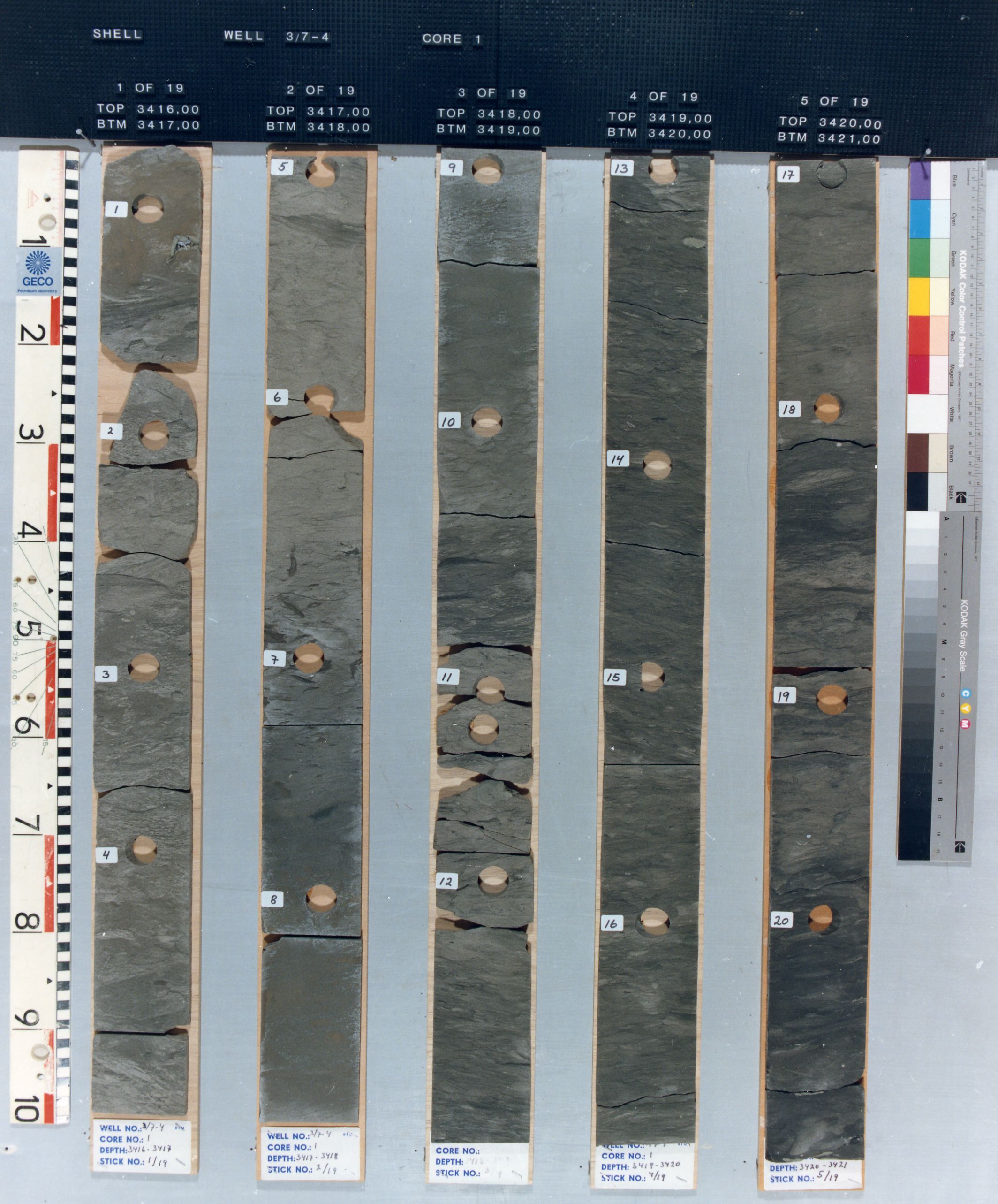
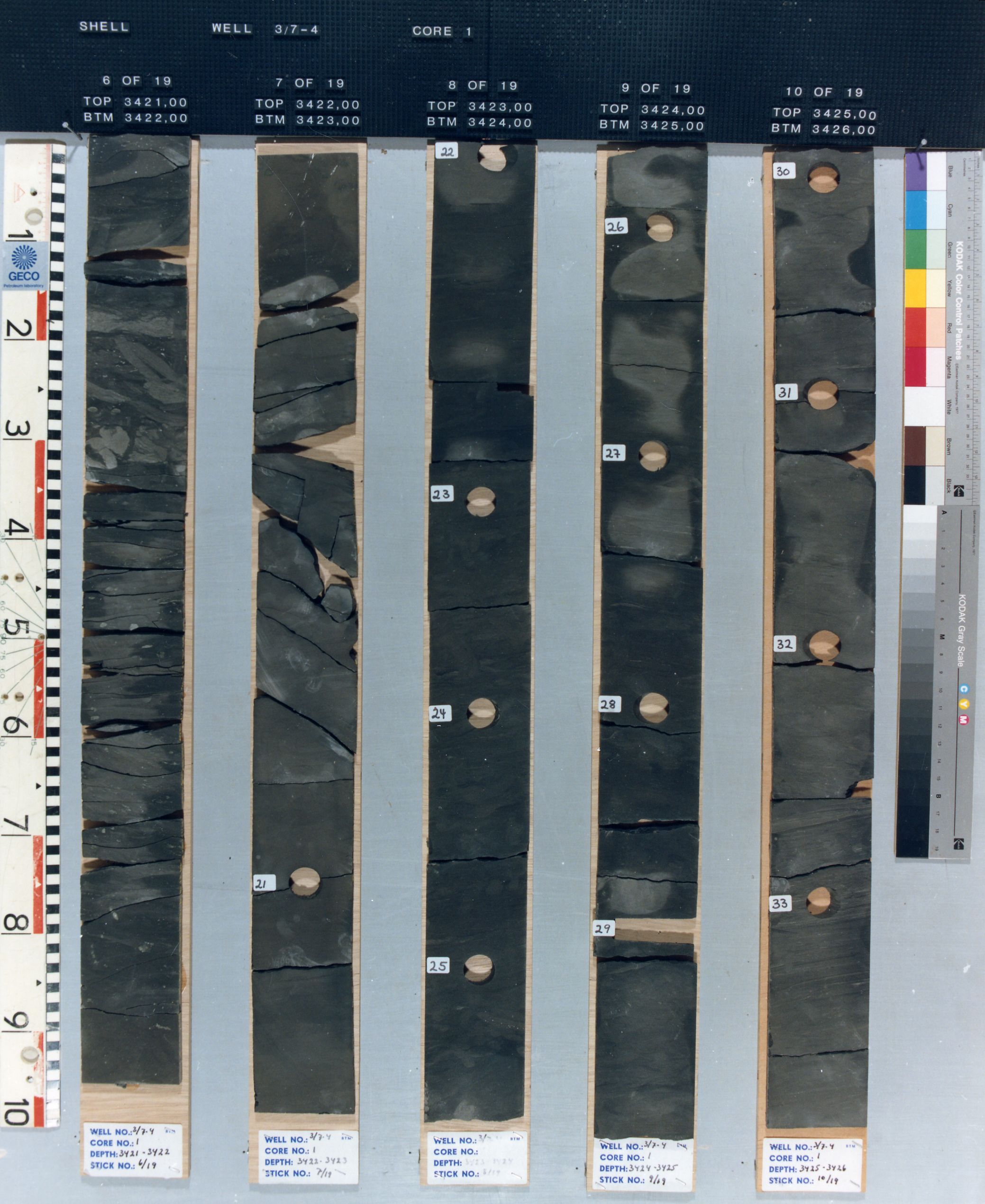
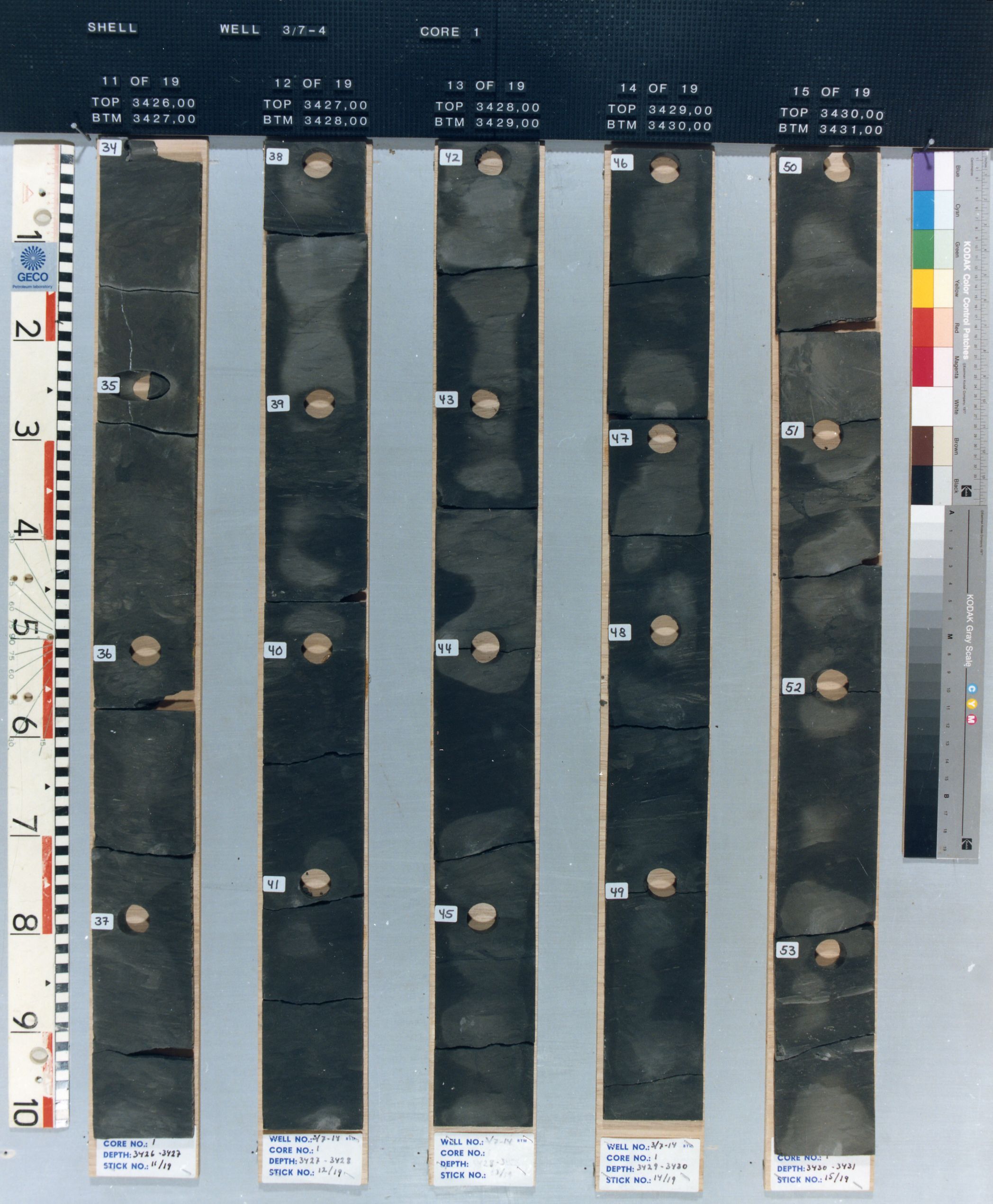
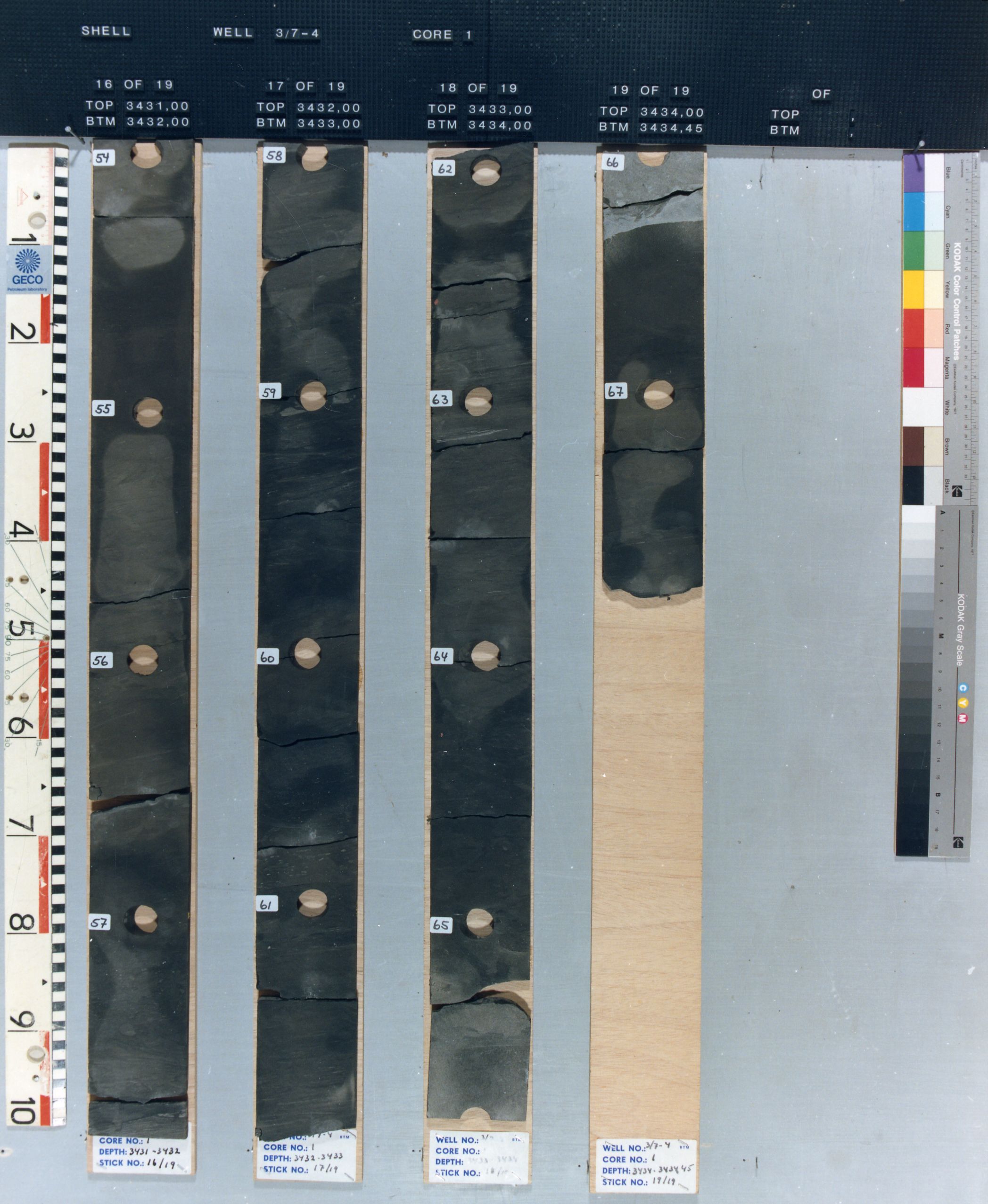
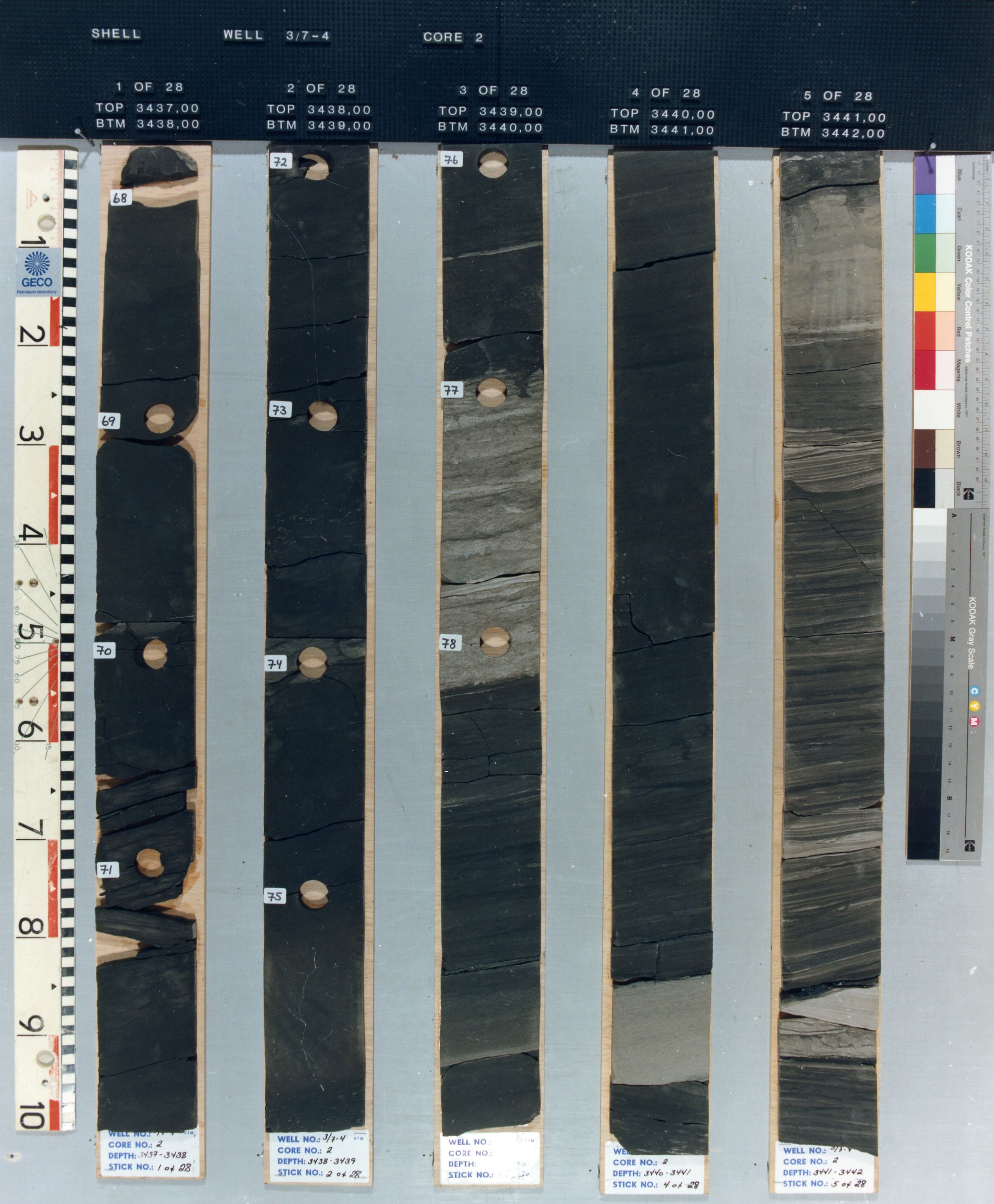
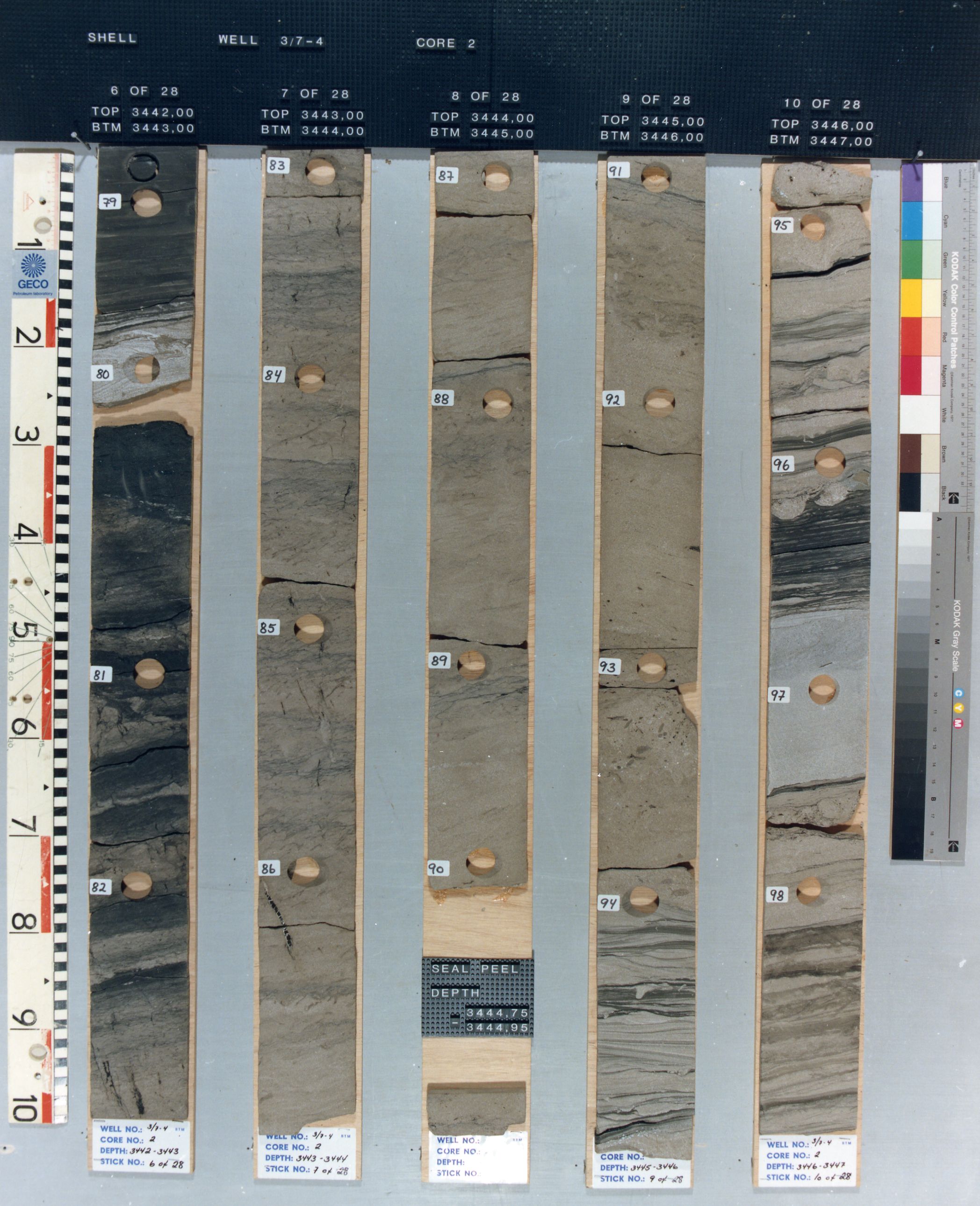
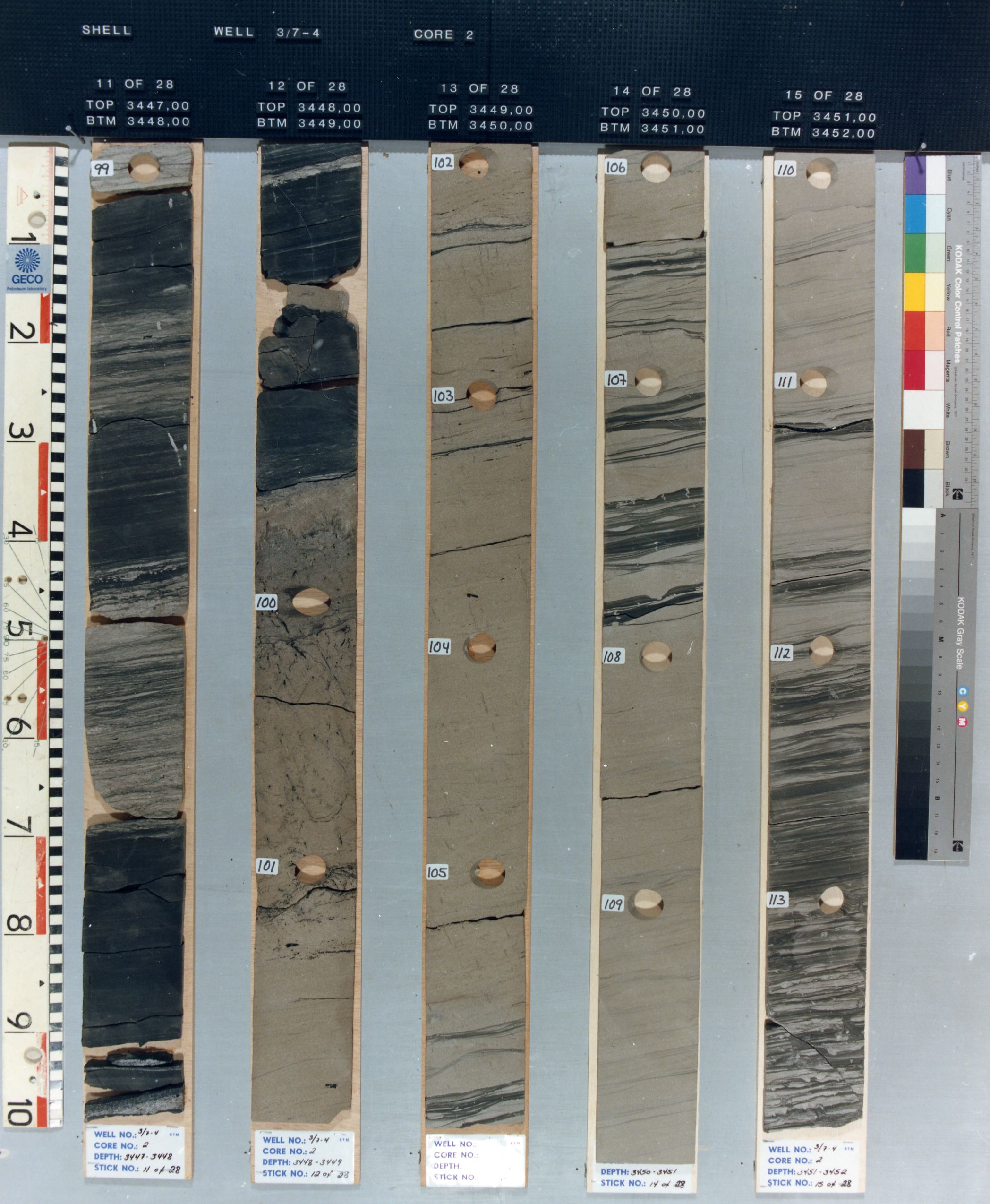
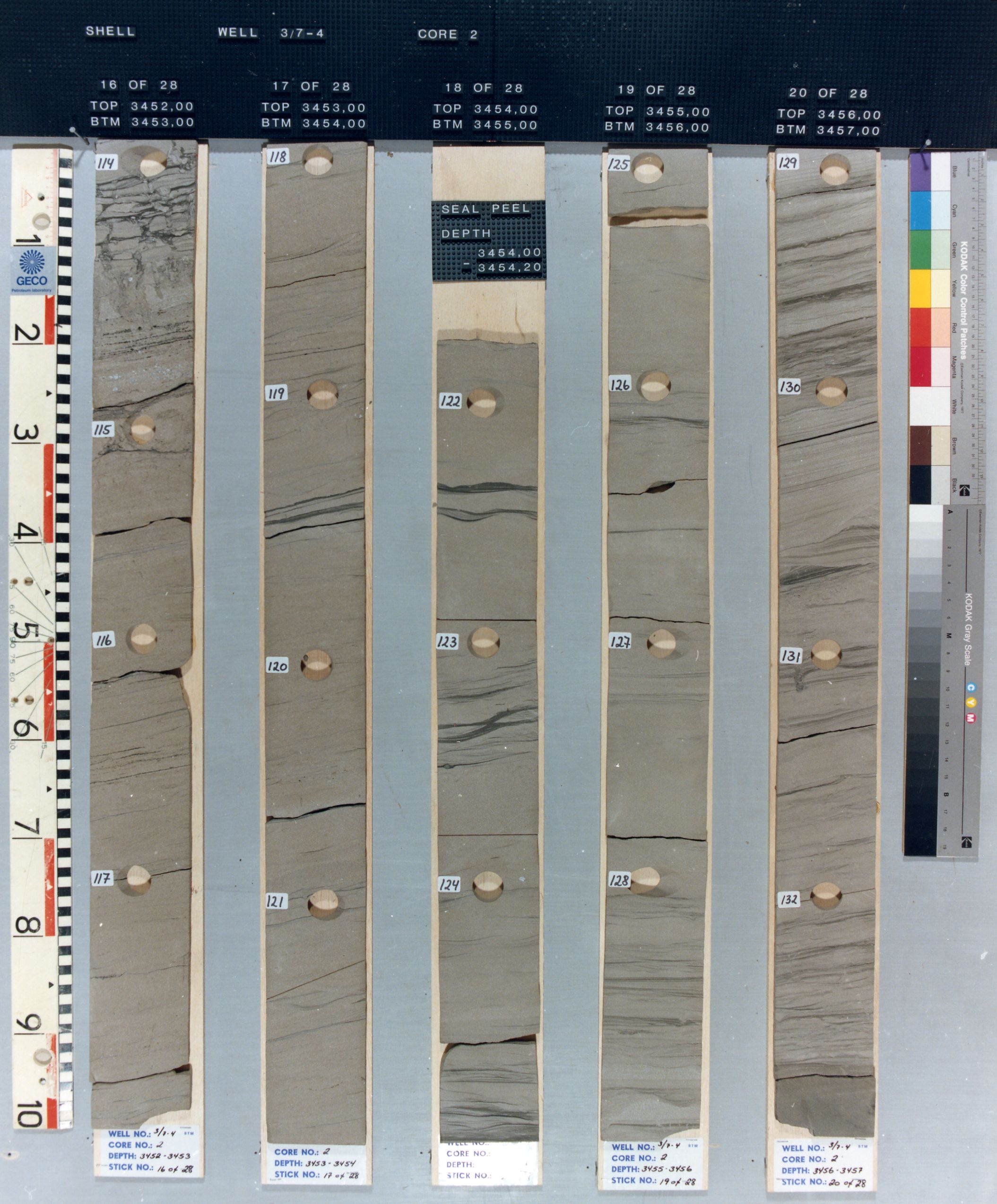
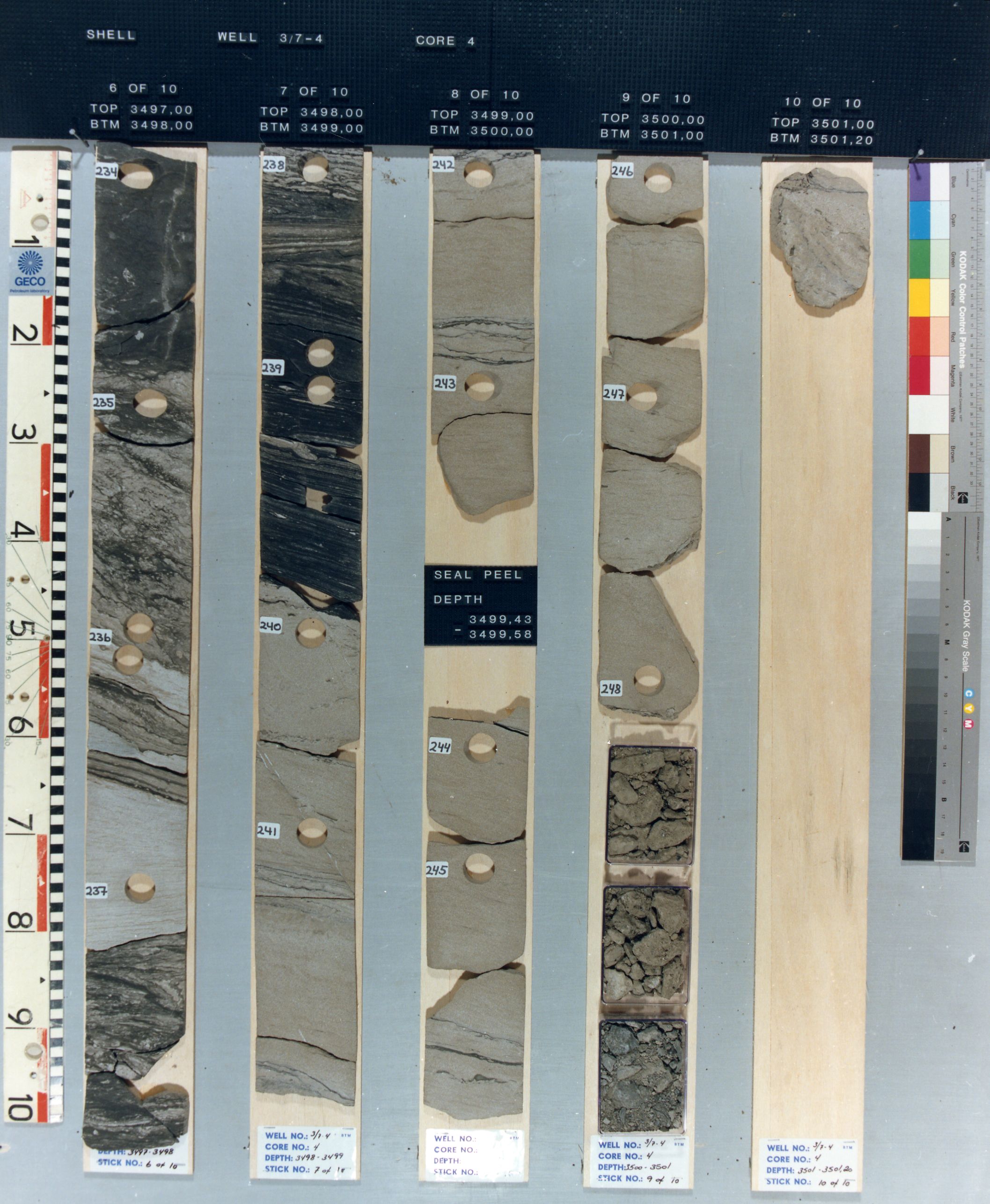
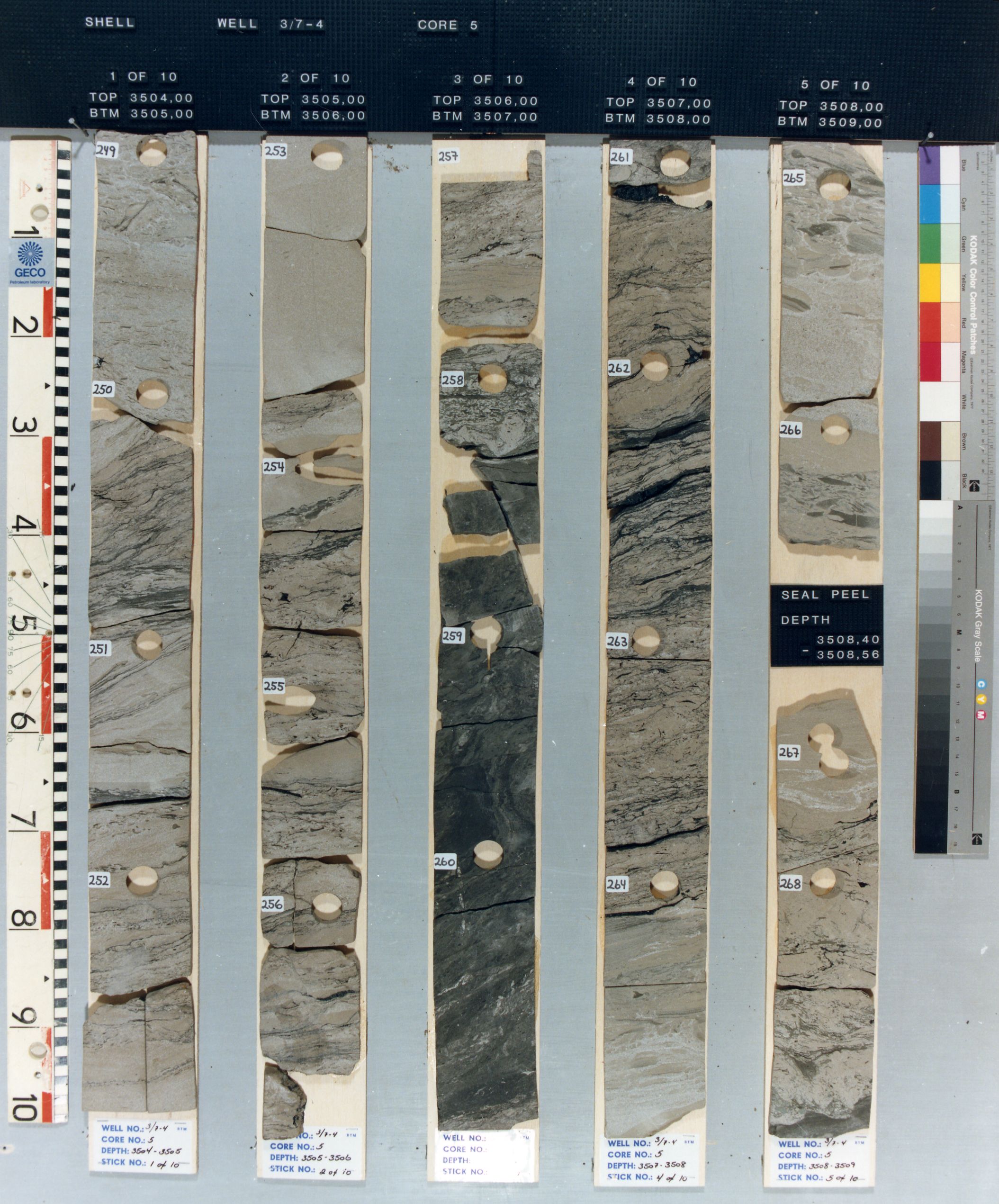
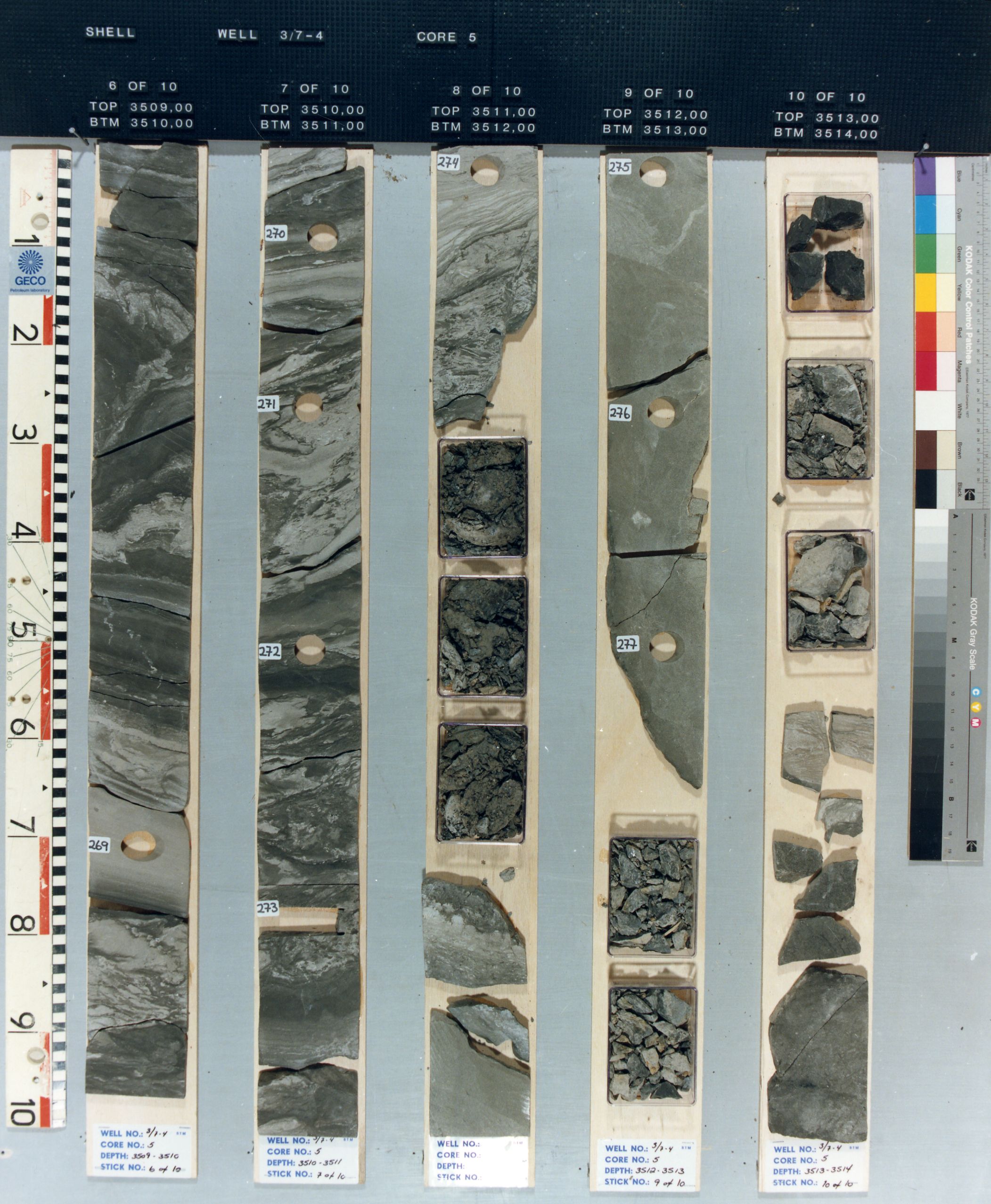
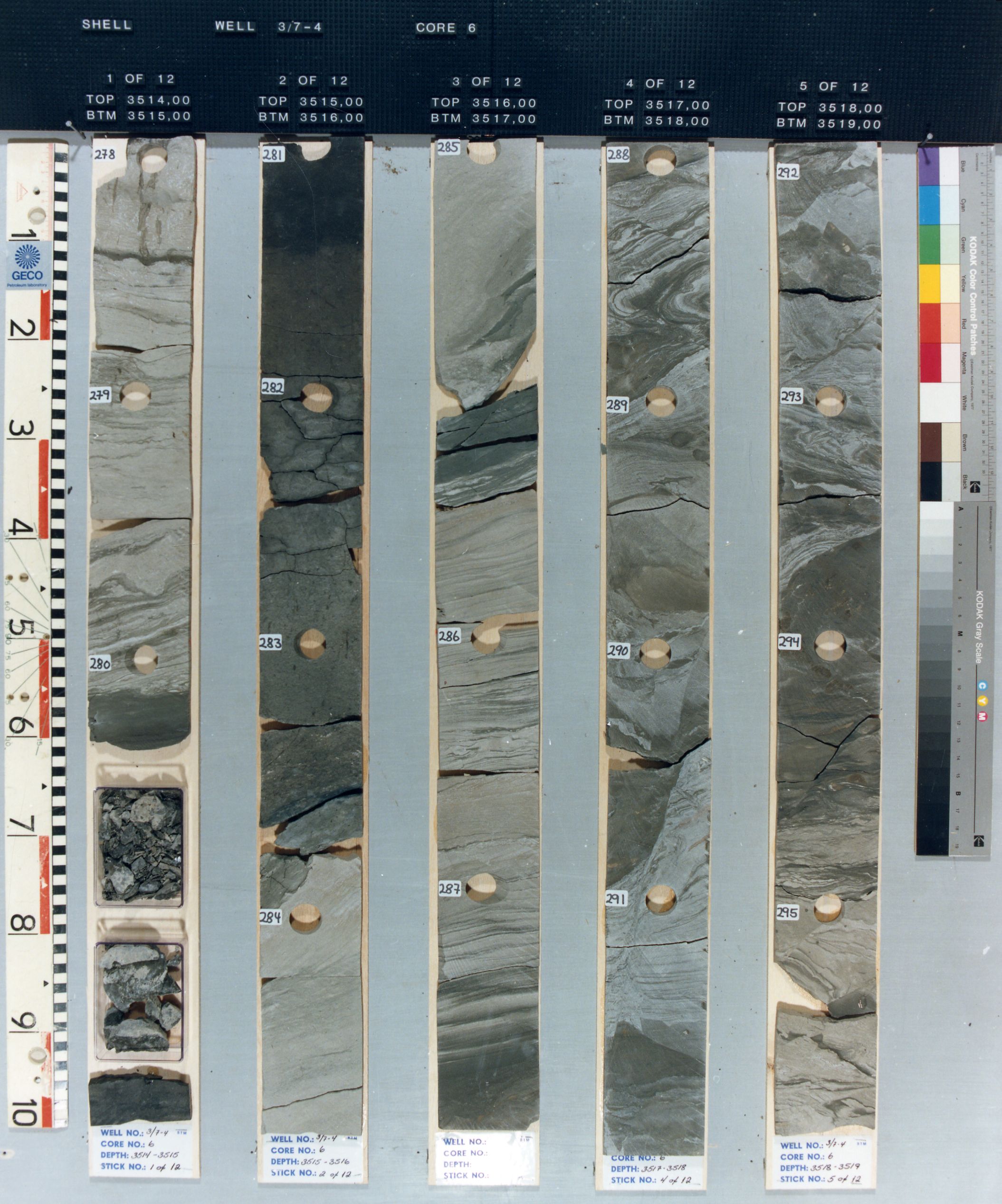
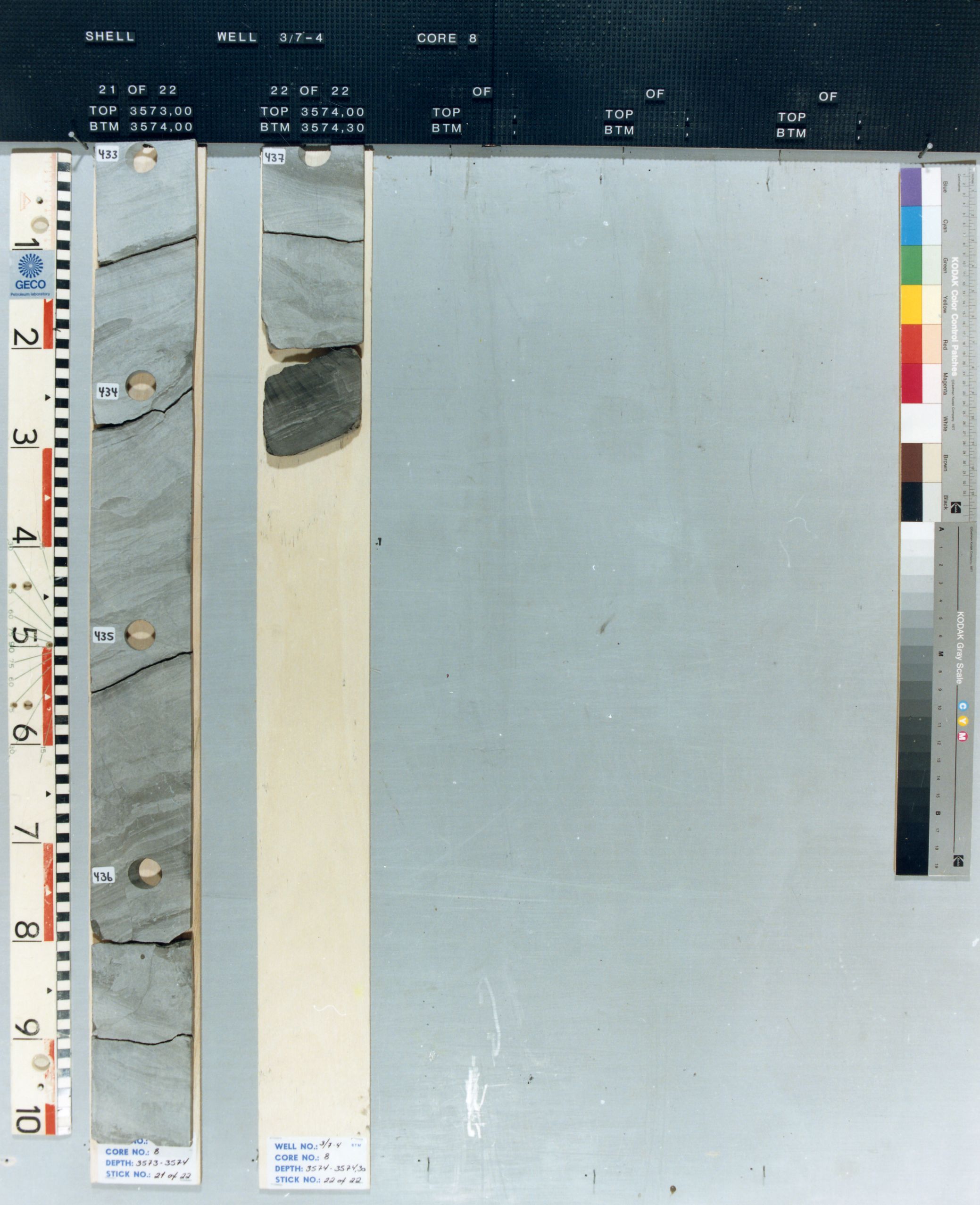
Borekjerner i Sokkeldirektoratet Kjerneprøve nummerKjerneprøve – topp dybdeKjerneprøve – bunn dybdeKjerneprøve dybde – enhet13416.03436.0[m ]23437.03464.7[m ]33464.43487.9[m ]43492.03501.2[m ]53504.03514.0[m ]63514.03520.0[m ]73526.03553.4[m ]83553.43574.3[m ]Borekjerner i Sokkeldirektoratet Total kjerneprøve lengde [m]144.7Borekjerner i Sokkeldirektoratet Kjerner tilgjengelig for prøvetaking?YES -
Kjernebilder
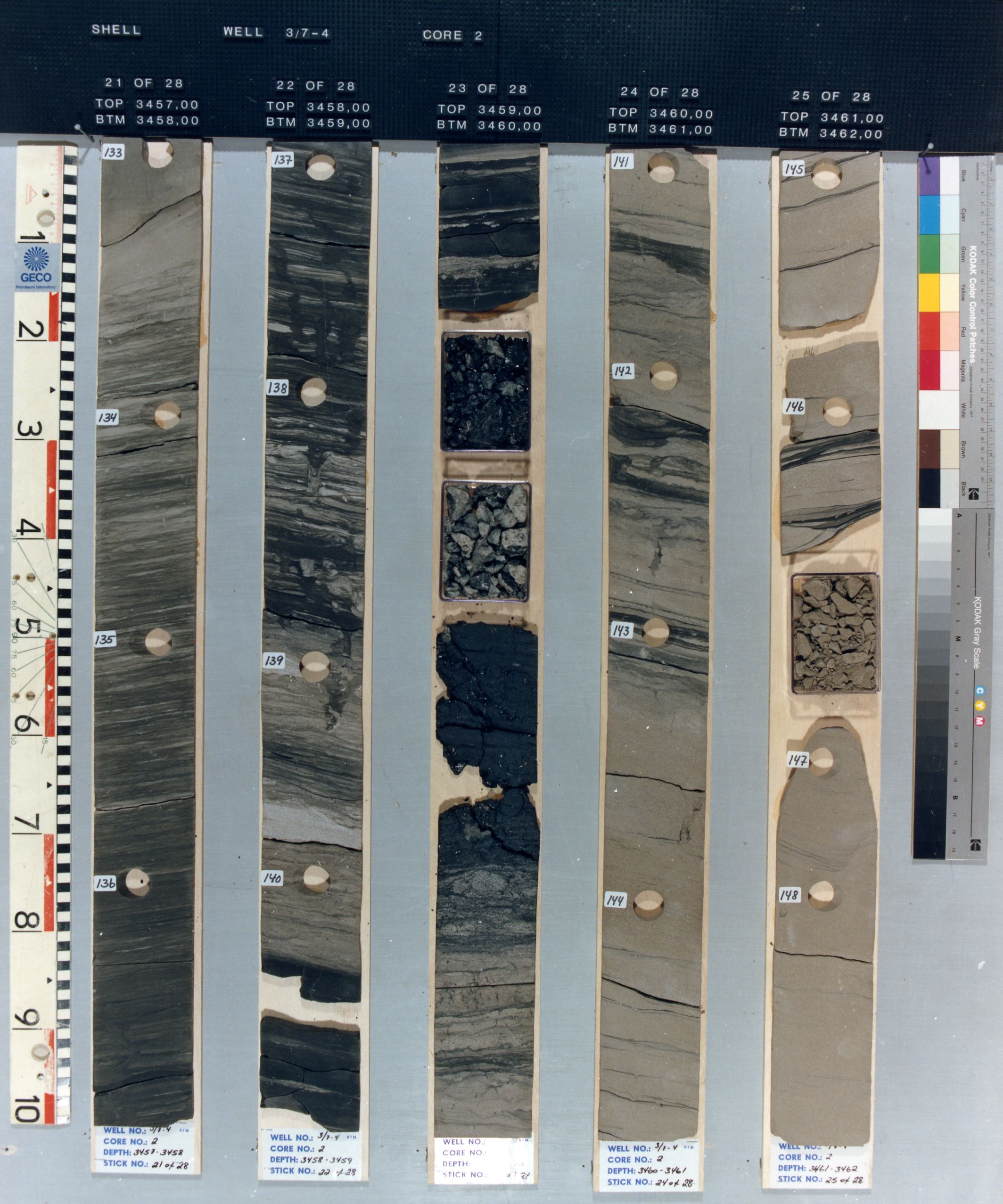
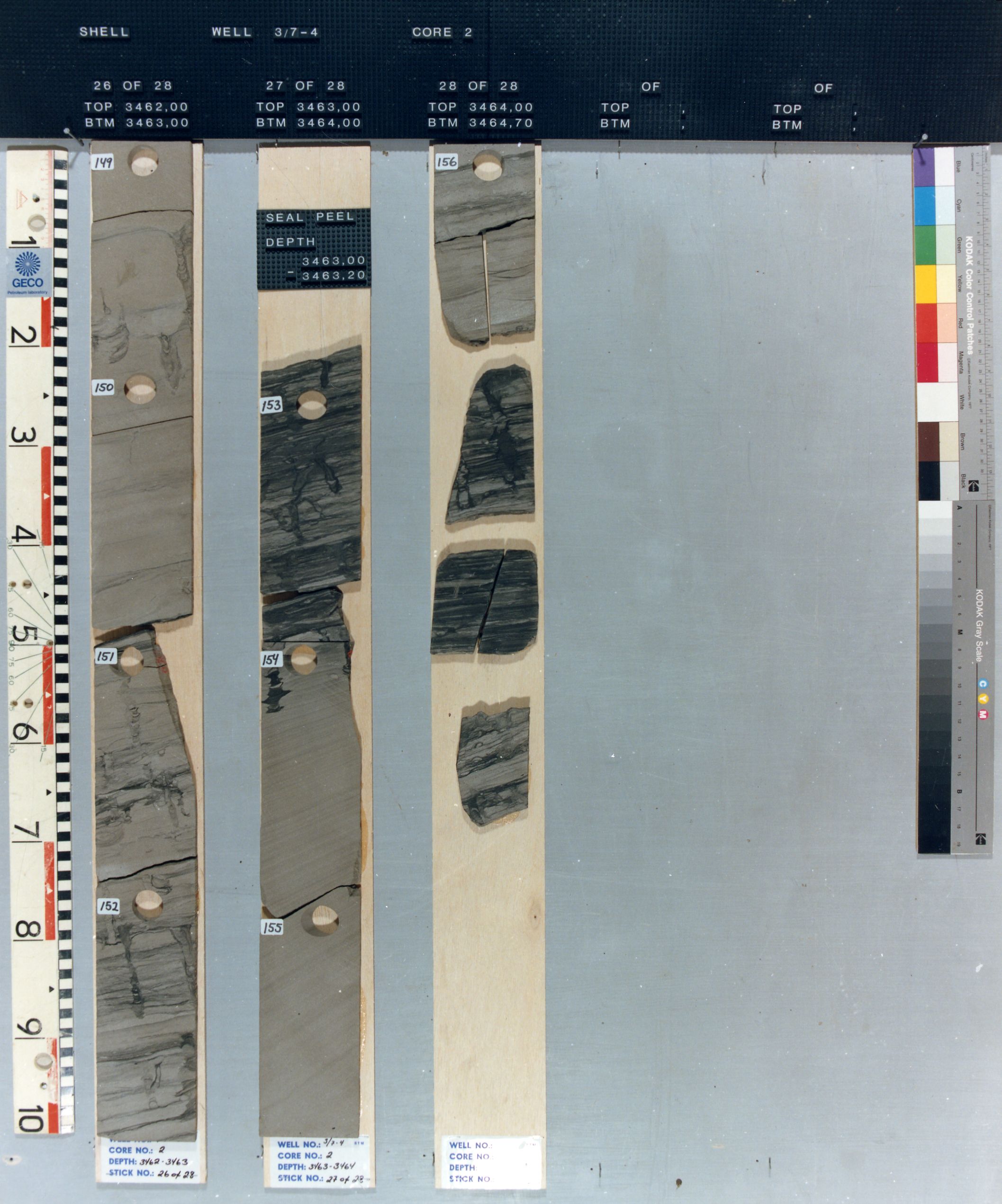
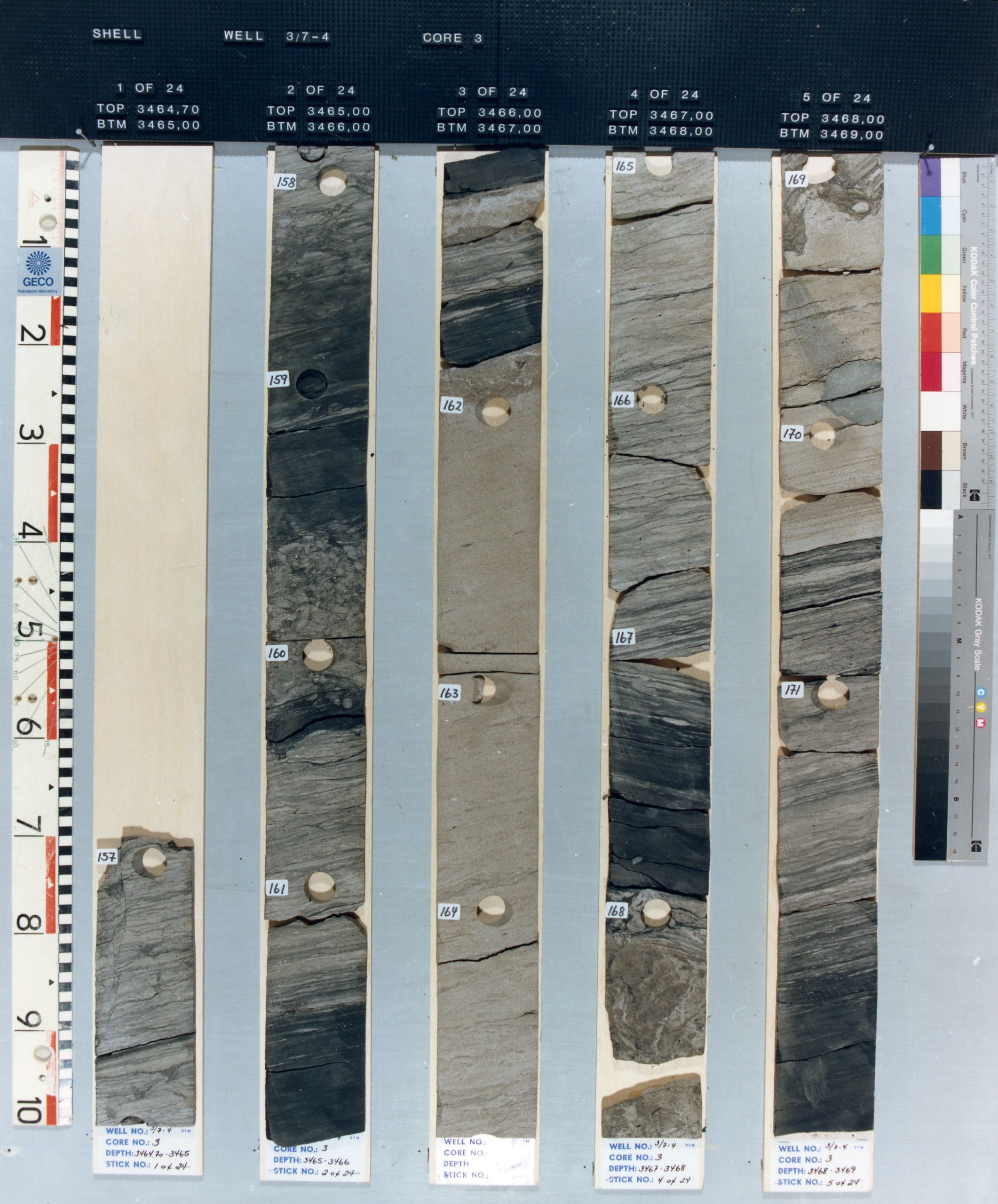
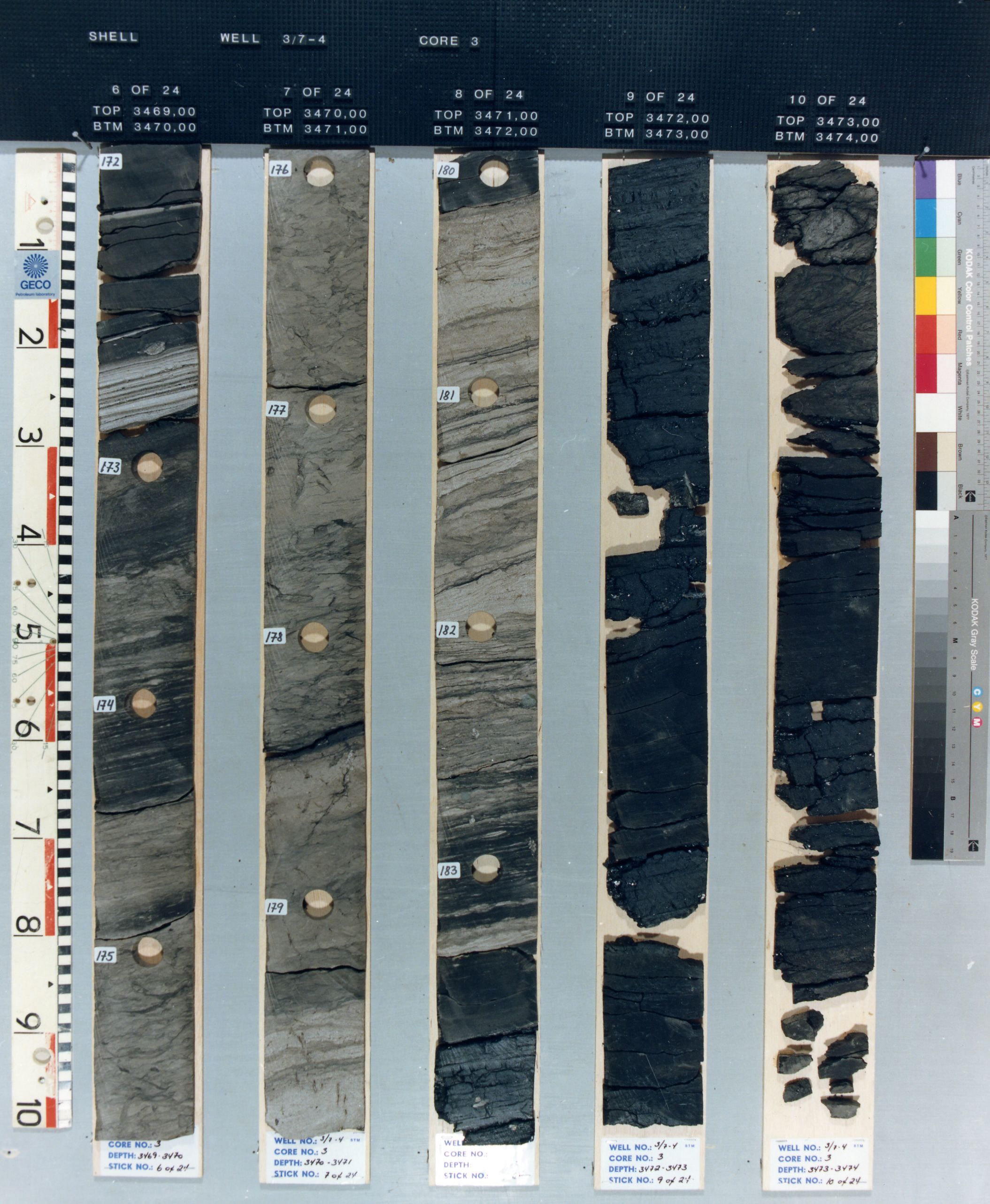
Kjernebilder 


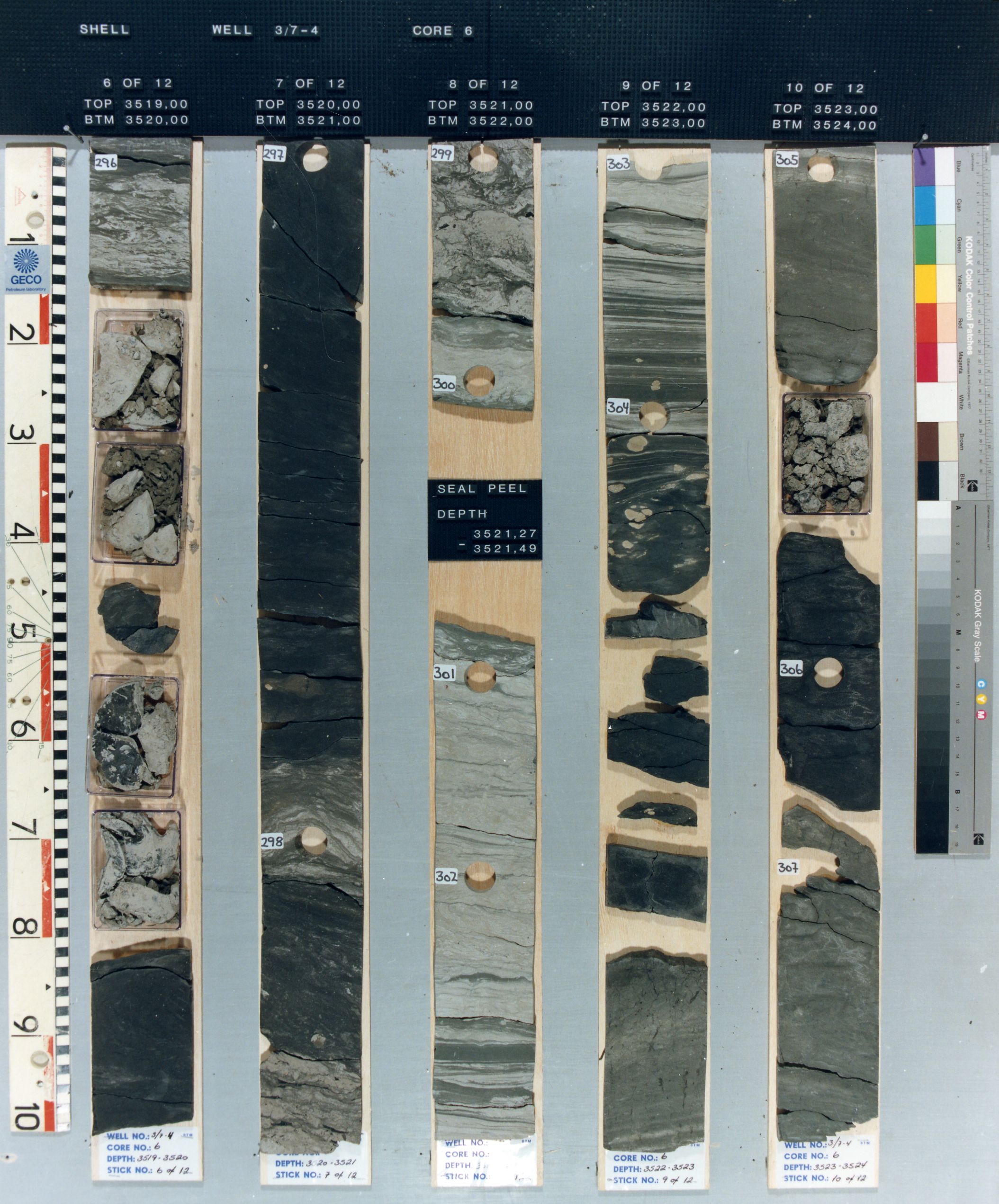
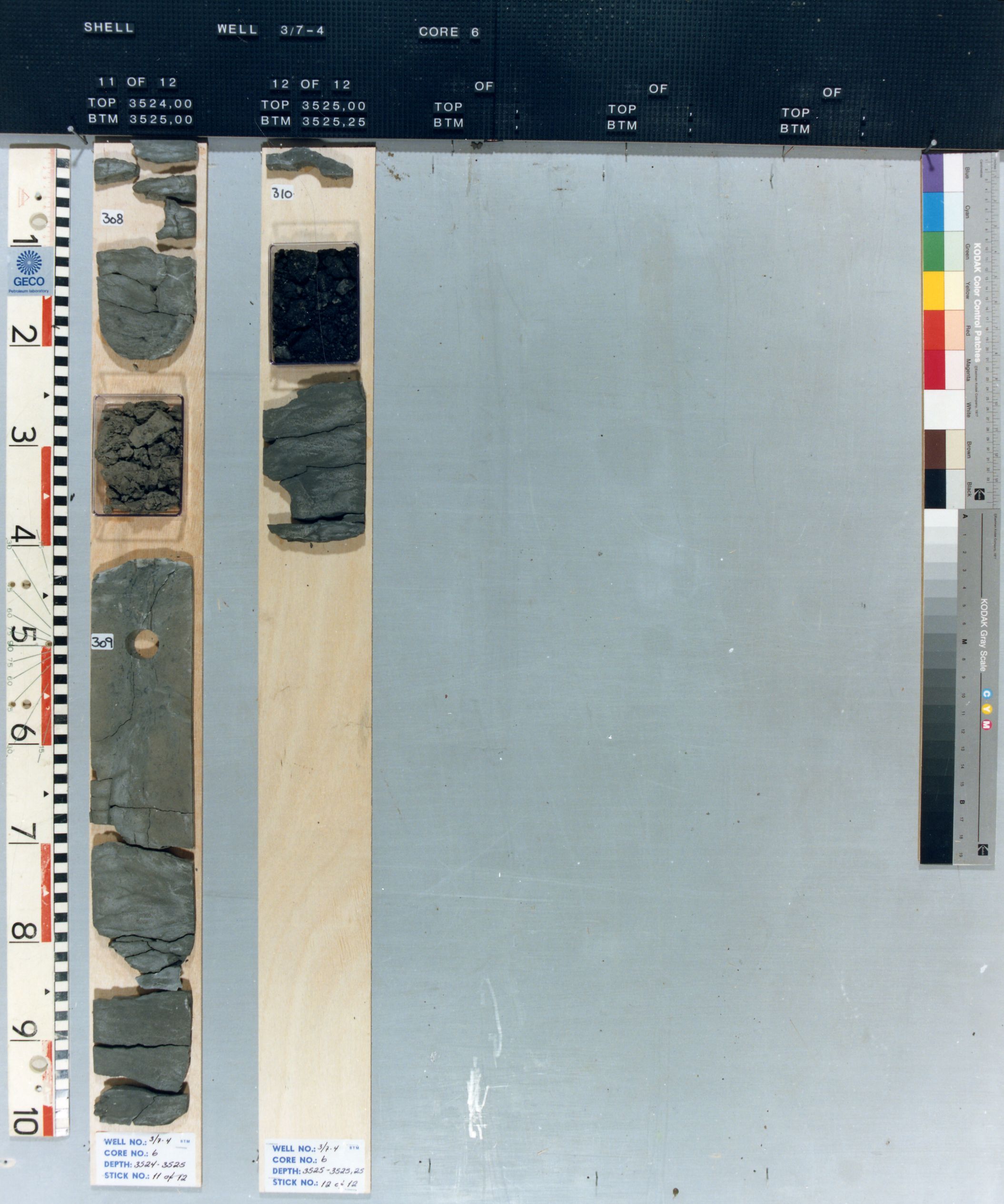
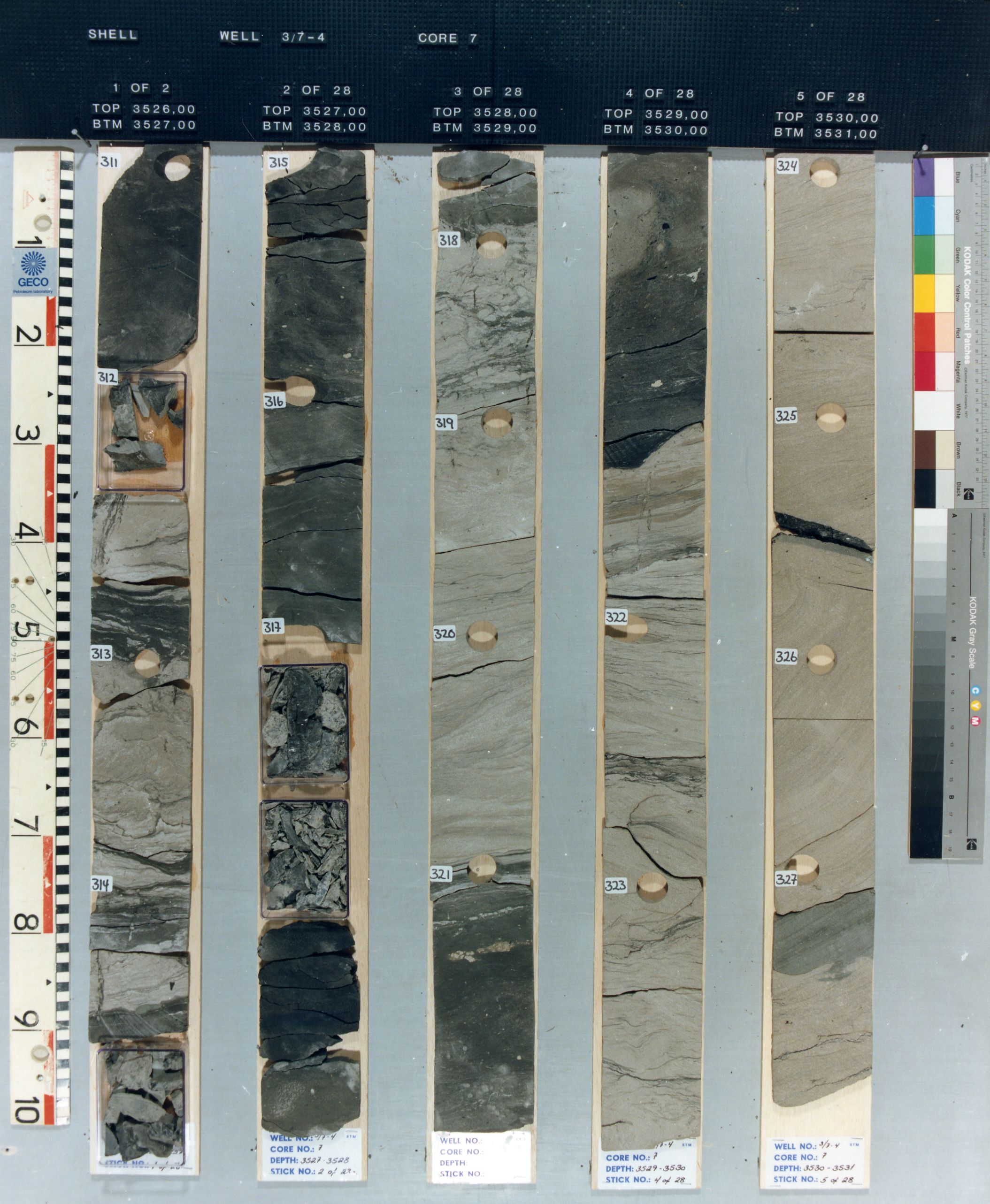
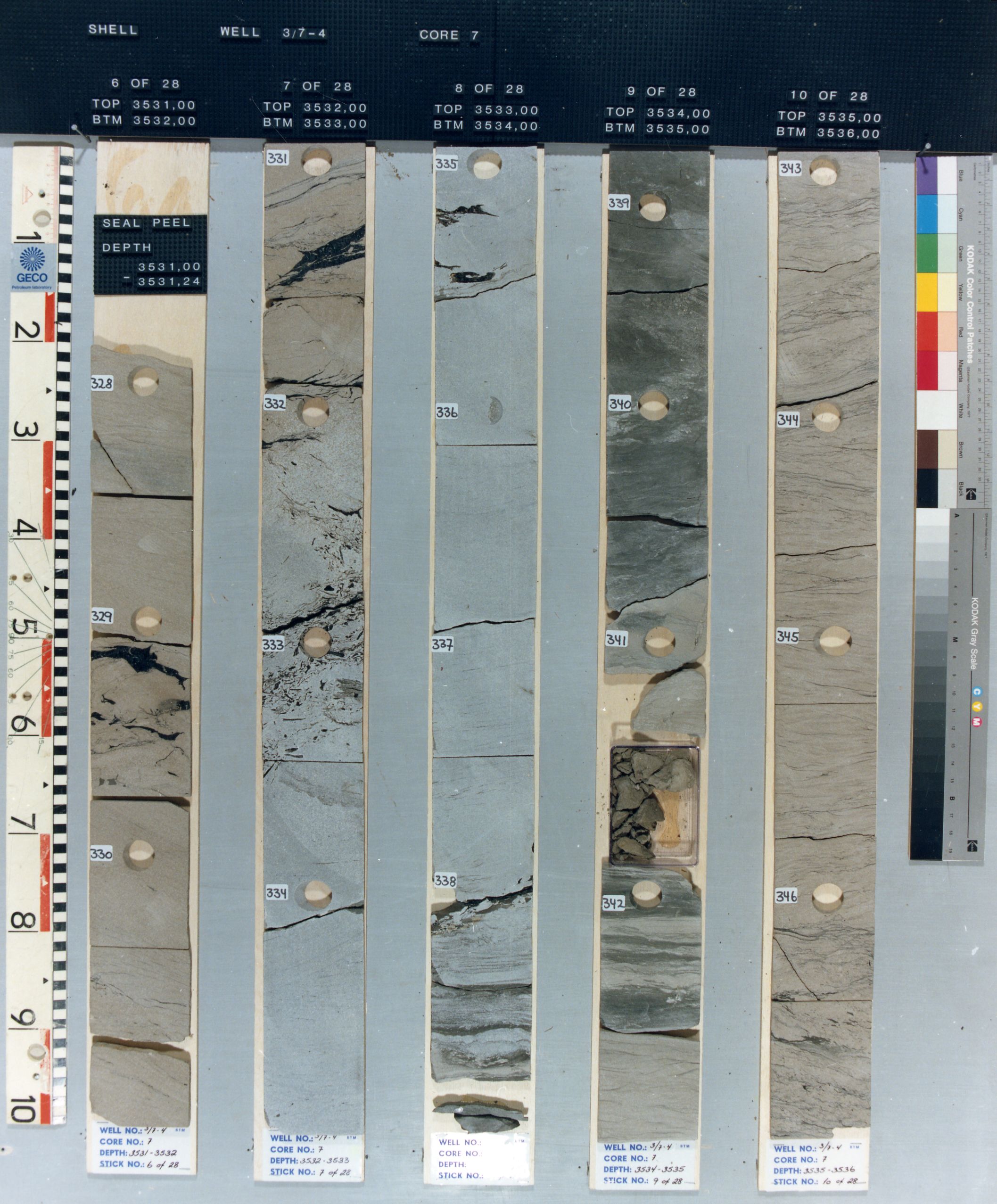
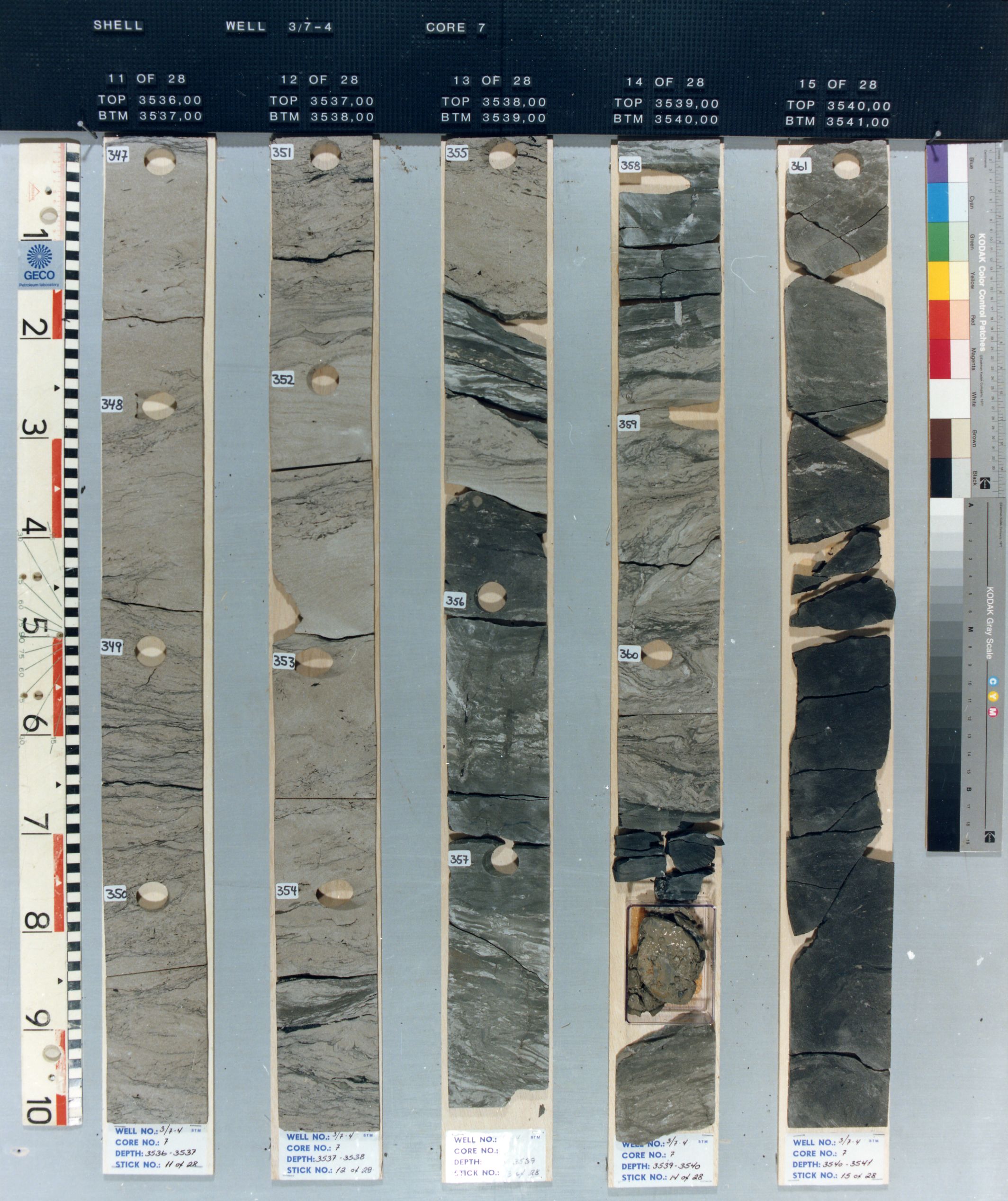
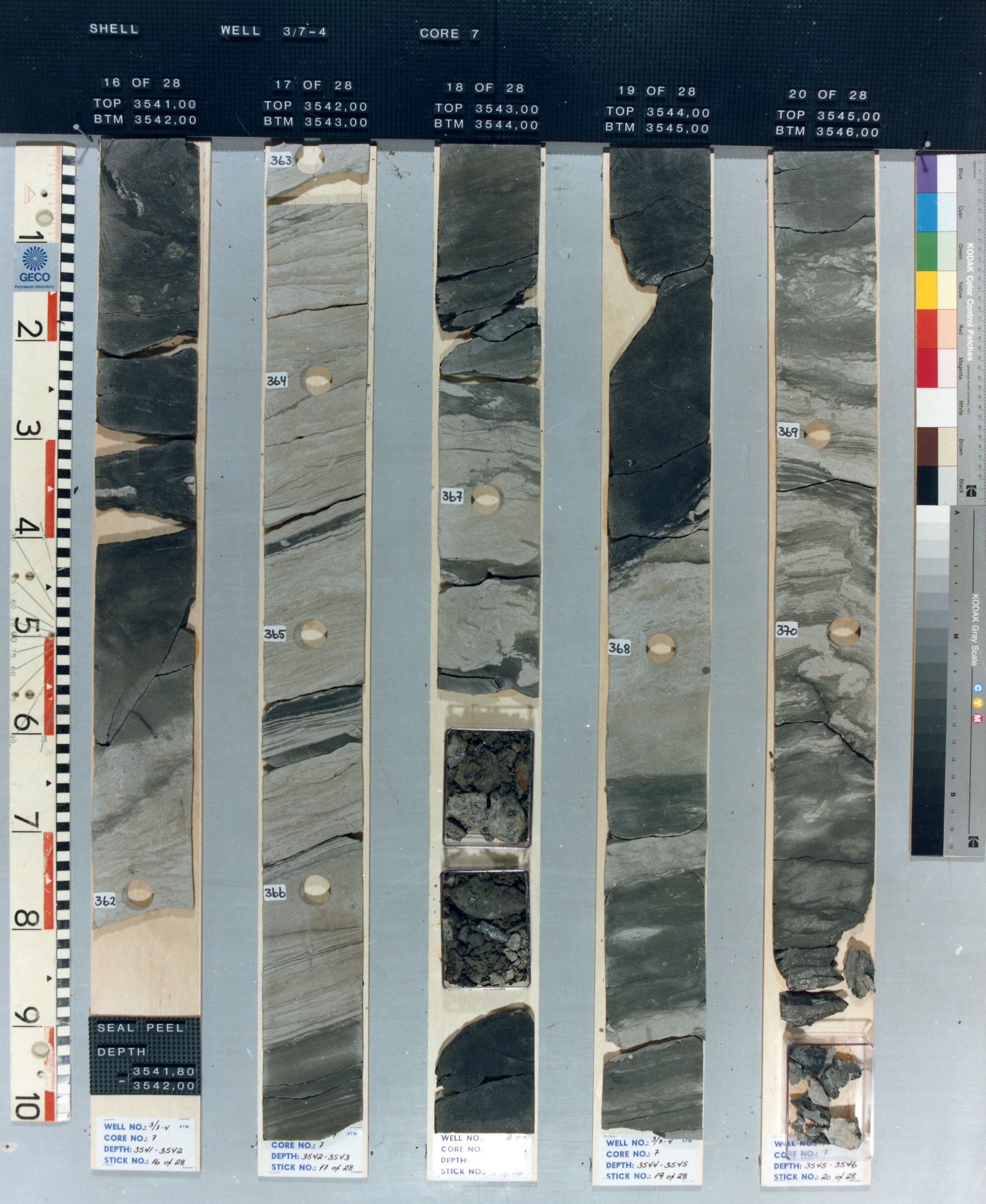
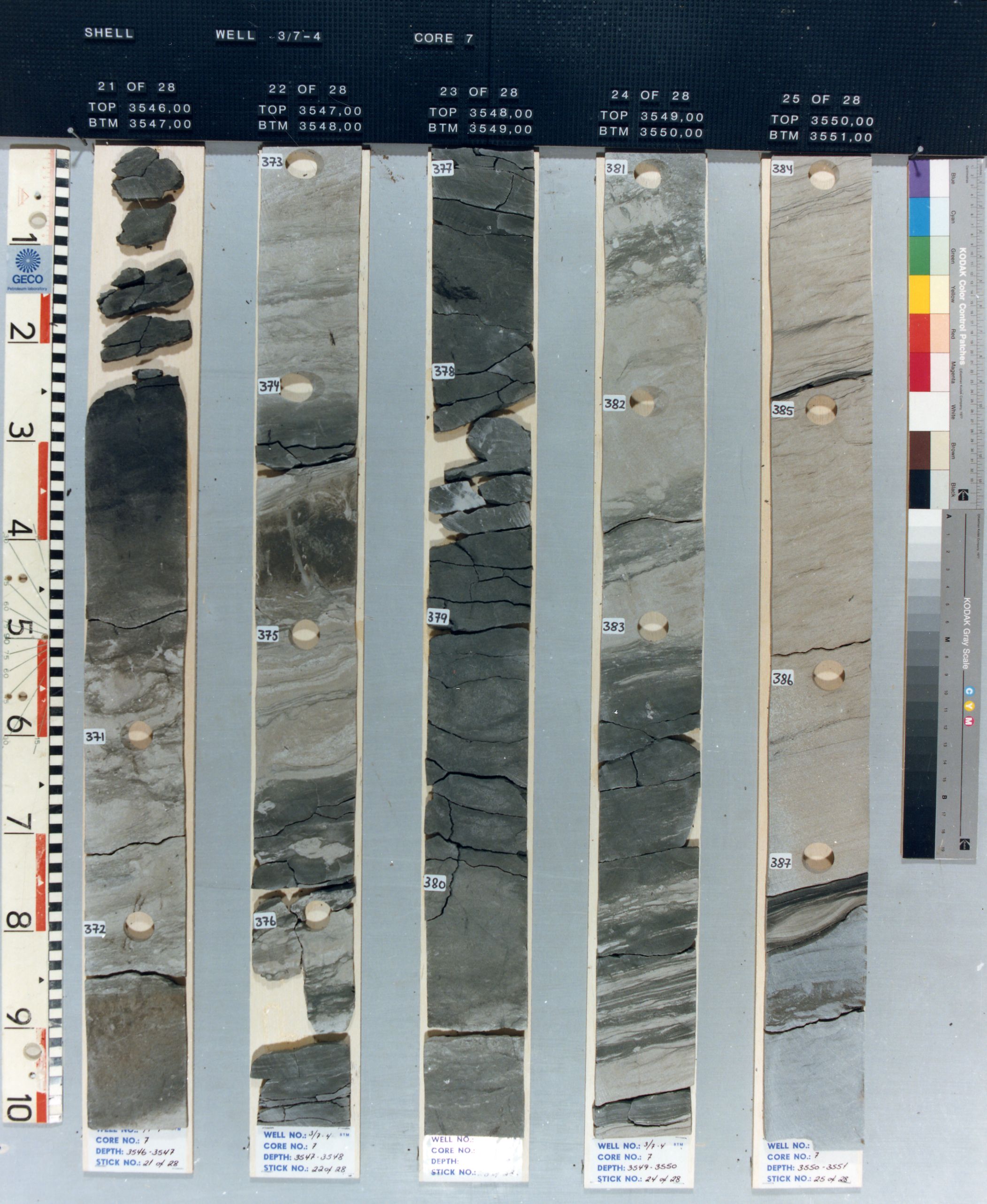
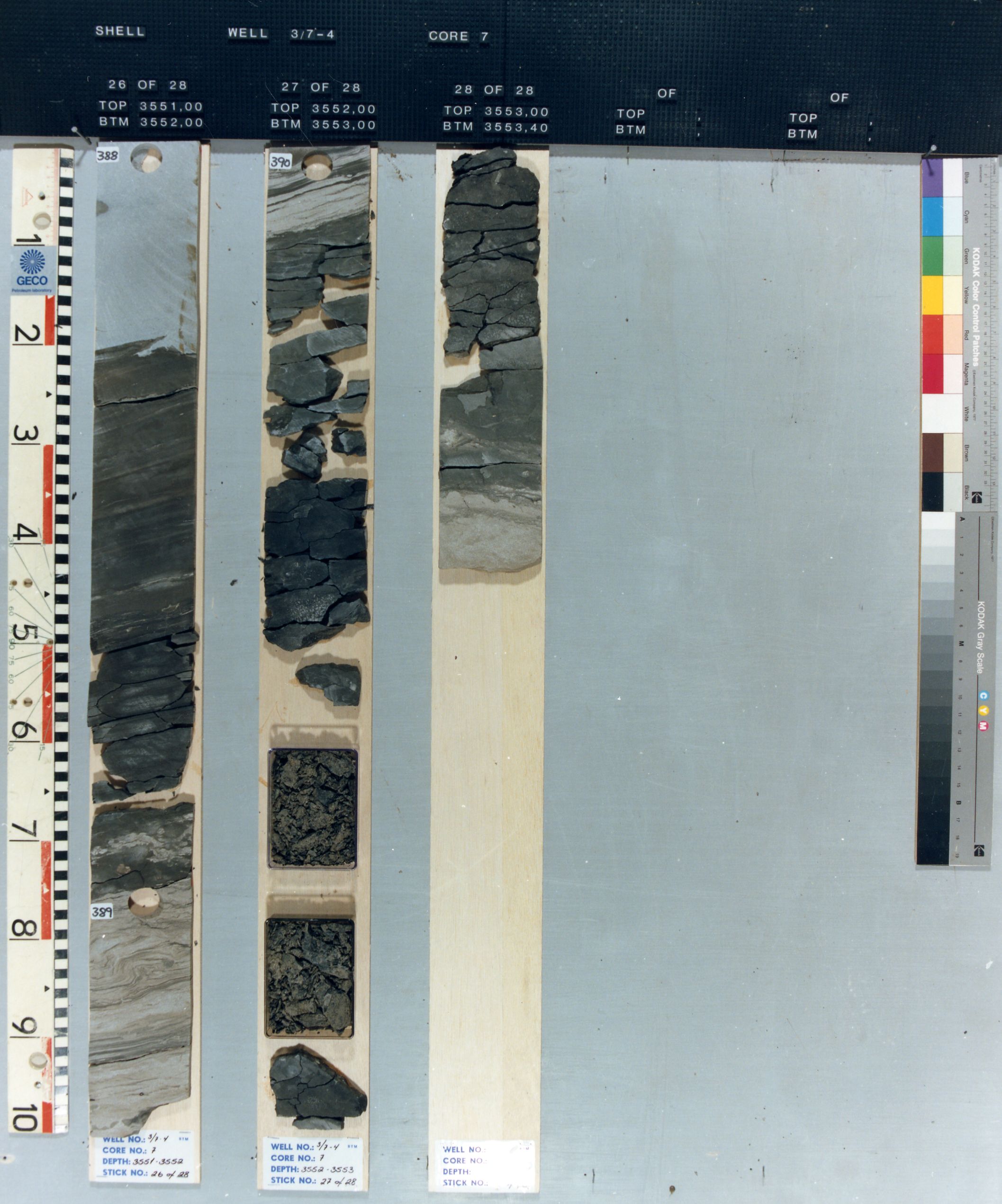
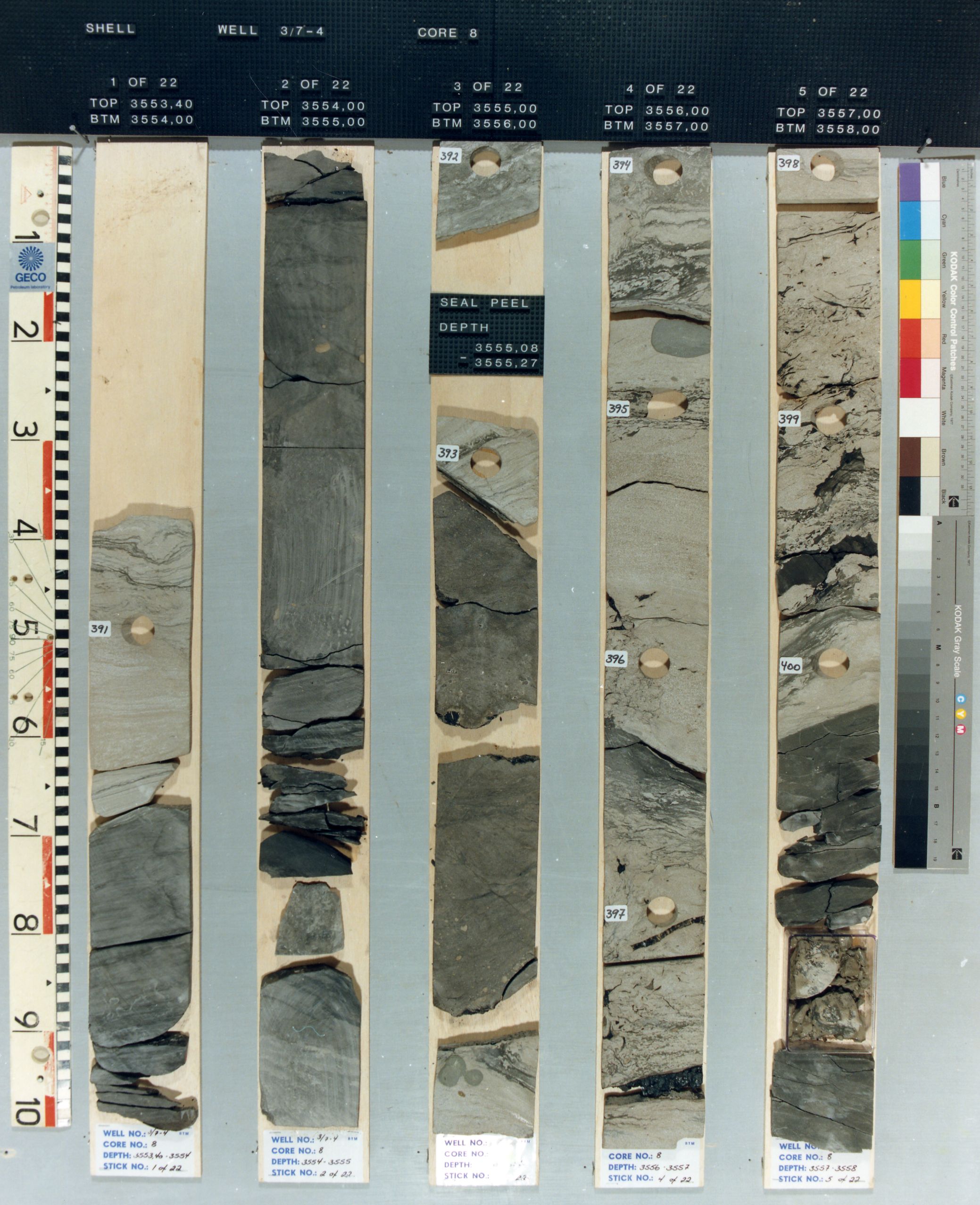
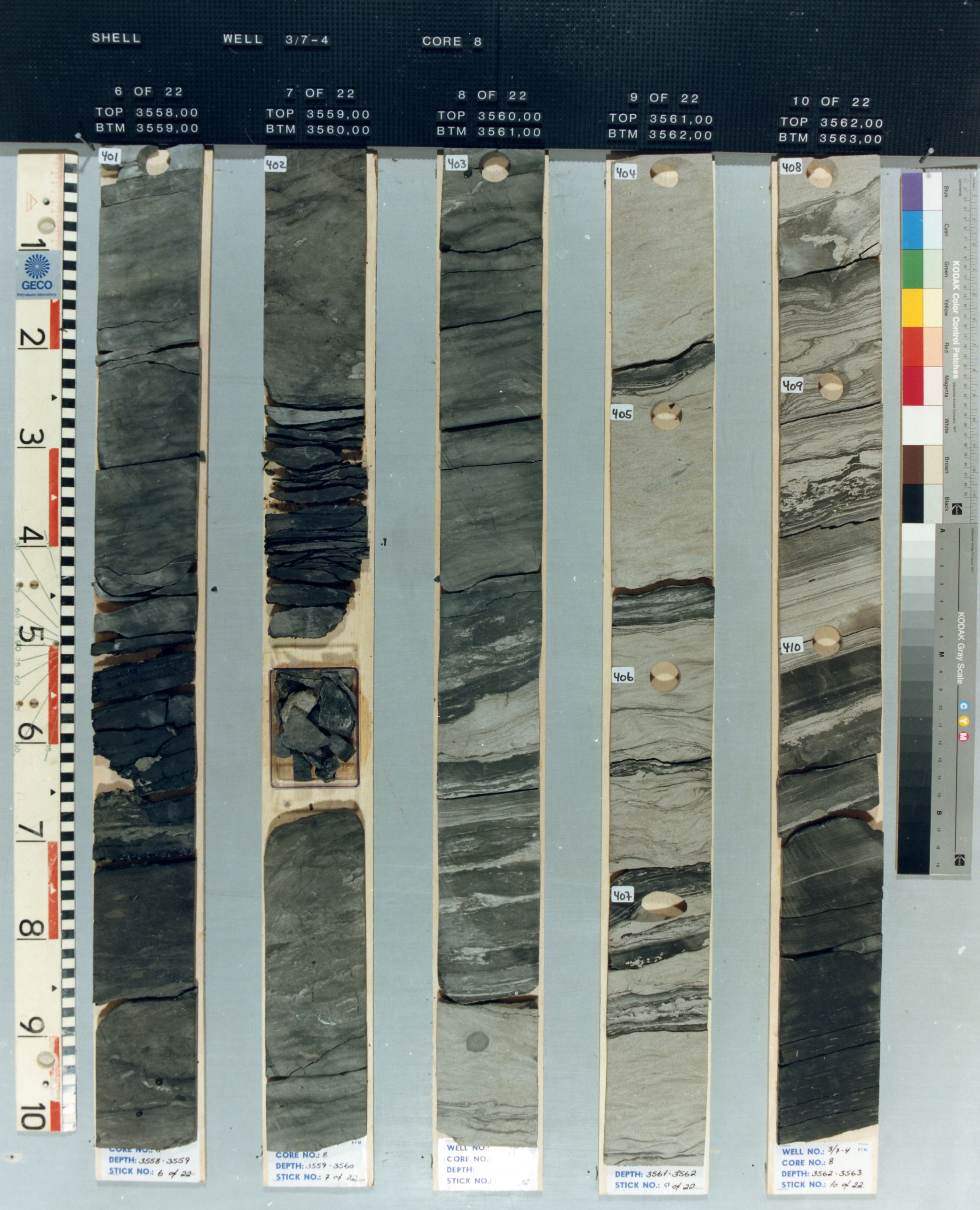
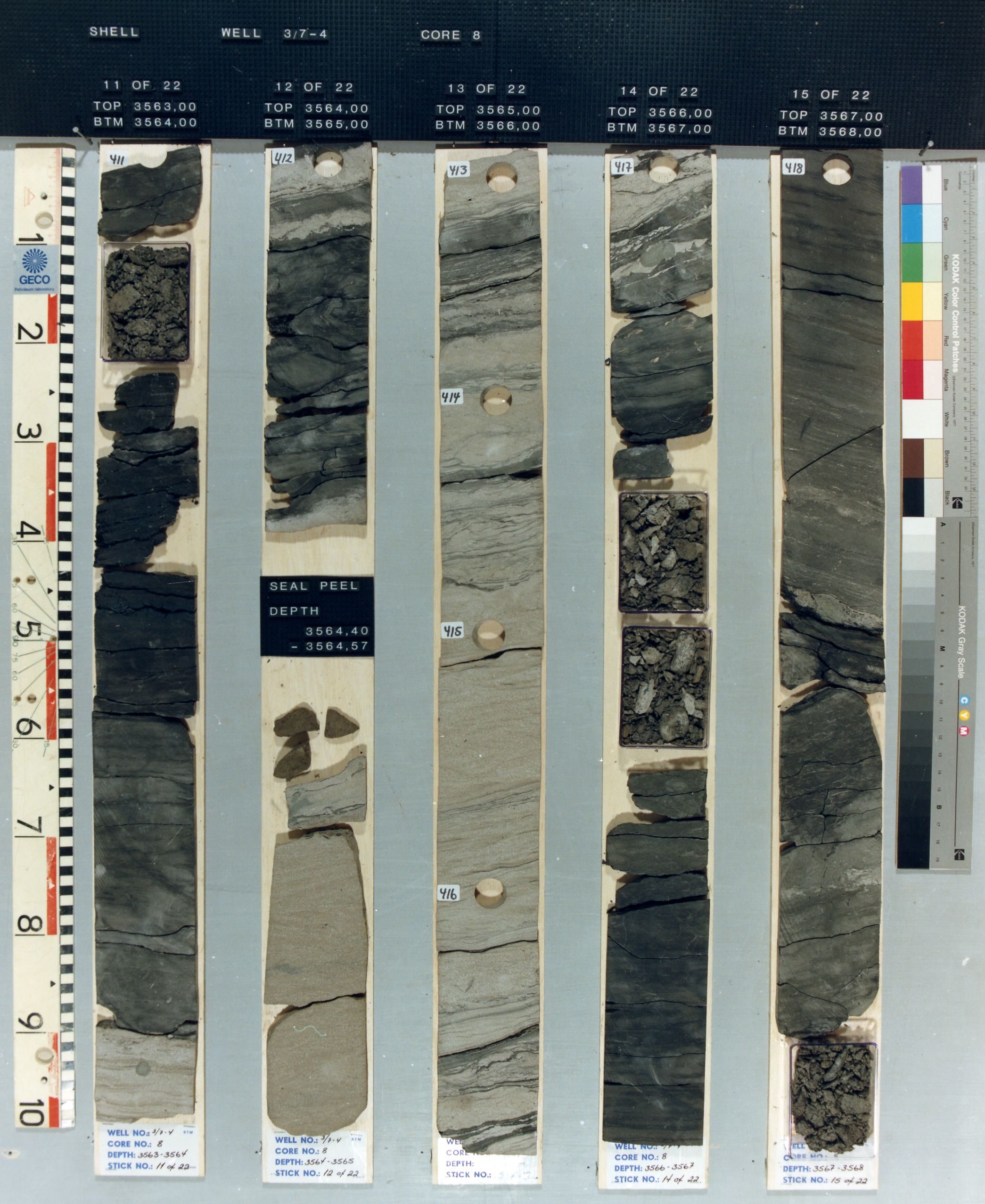
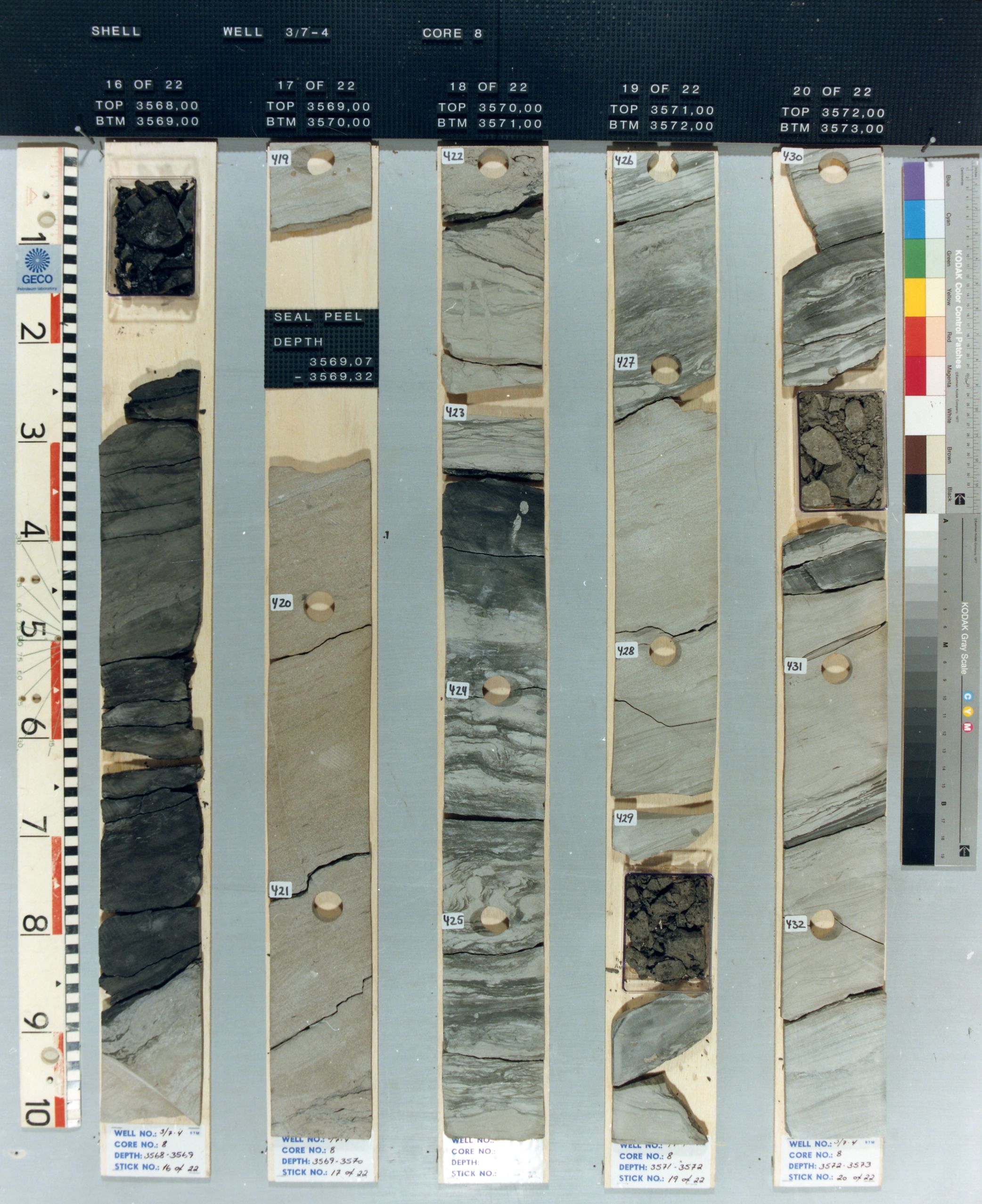
 3416-3421m3421-3426m3426-3431m3431-3434m3437-3442m


 3442-3447m3447-3452m3452-3457m3457-3462m3462-3465m


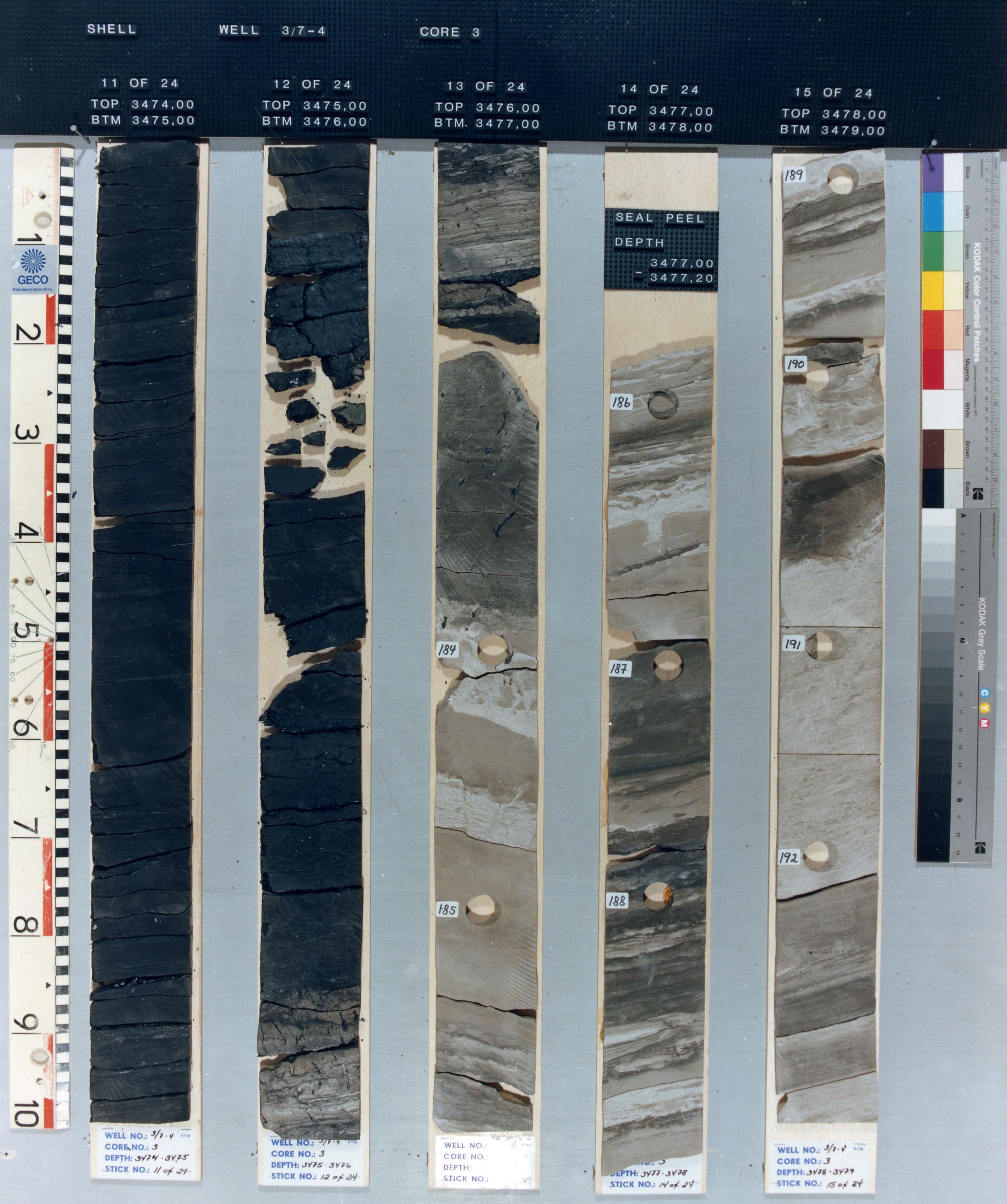
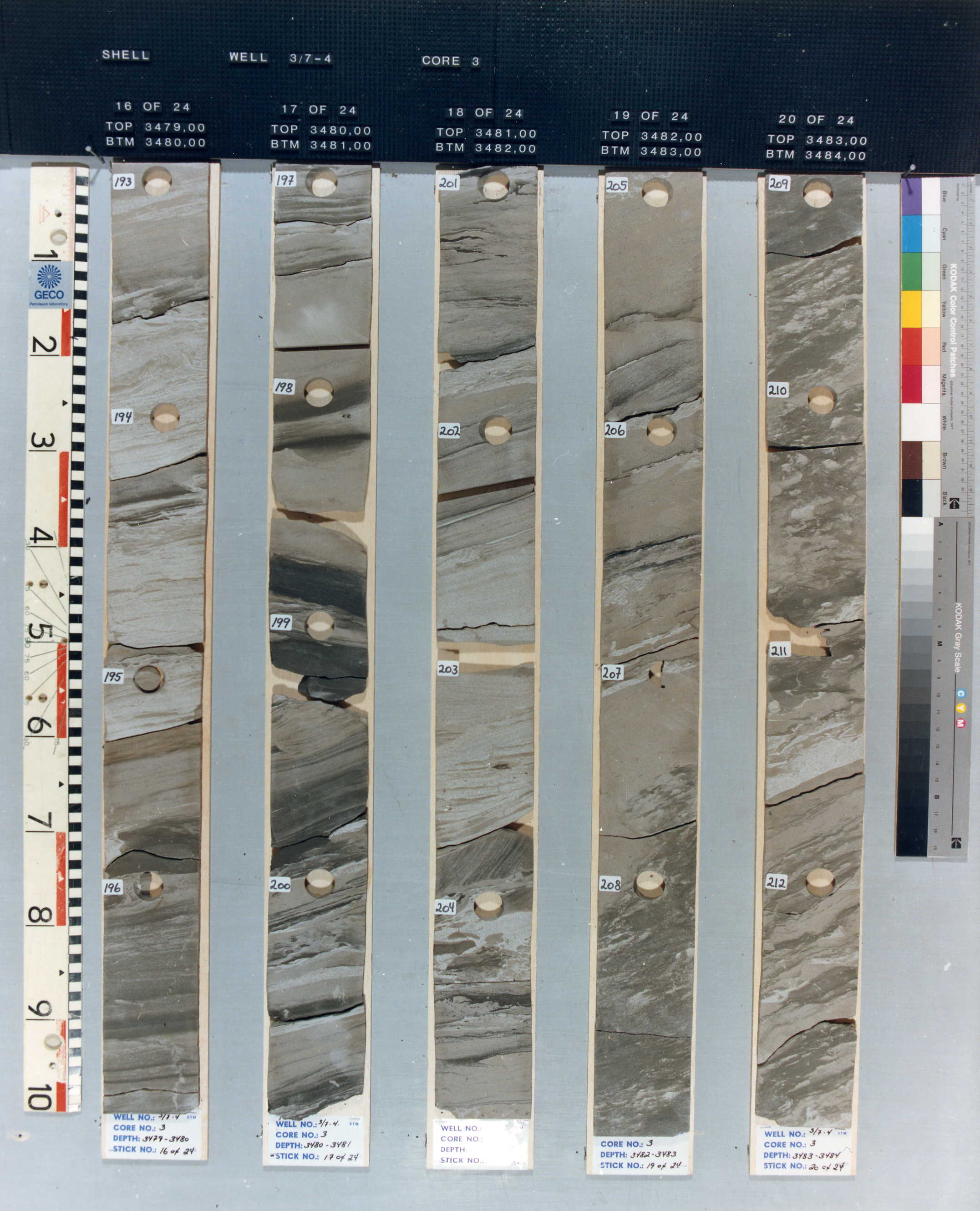
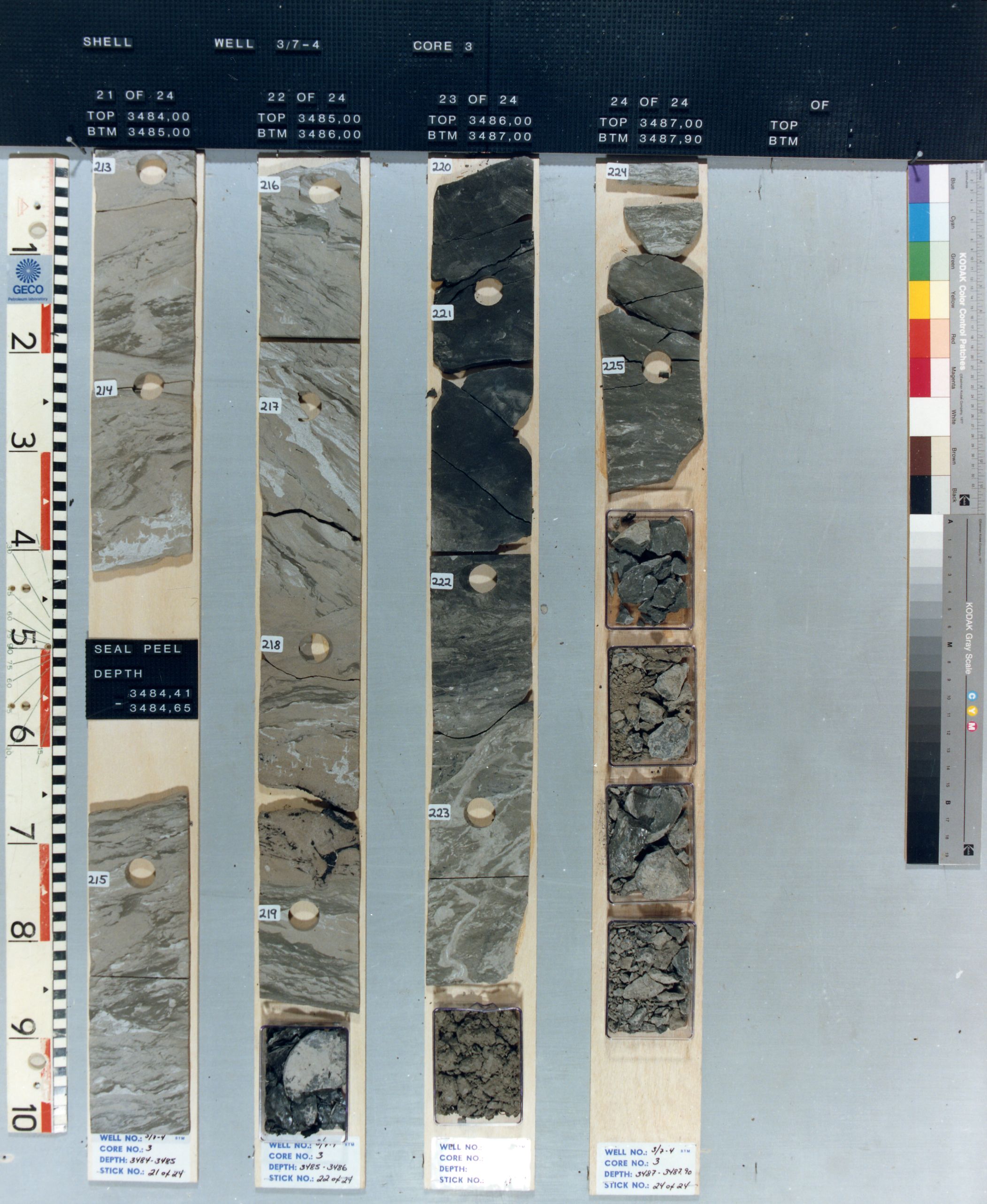
 3464-3469m3469-3474m3474-3479m3479-3484m3484-3487m


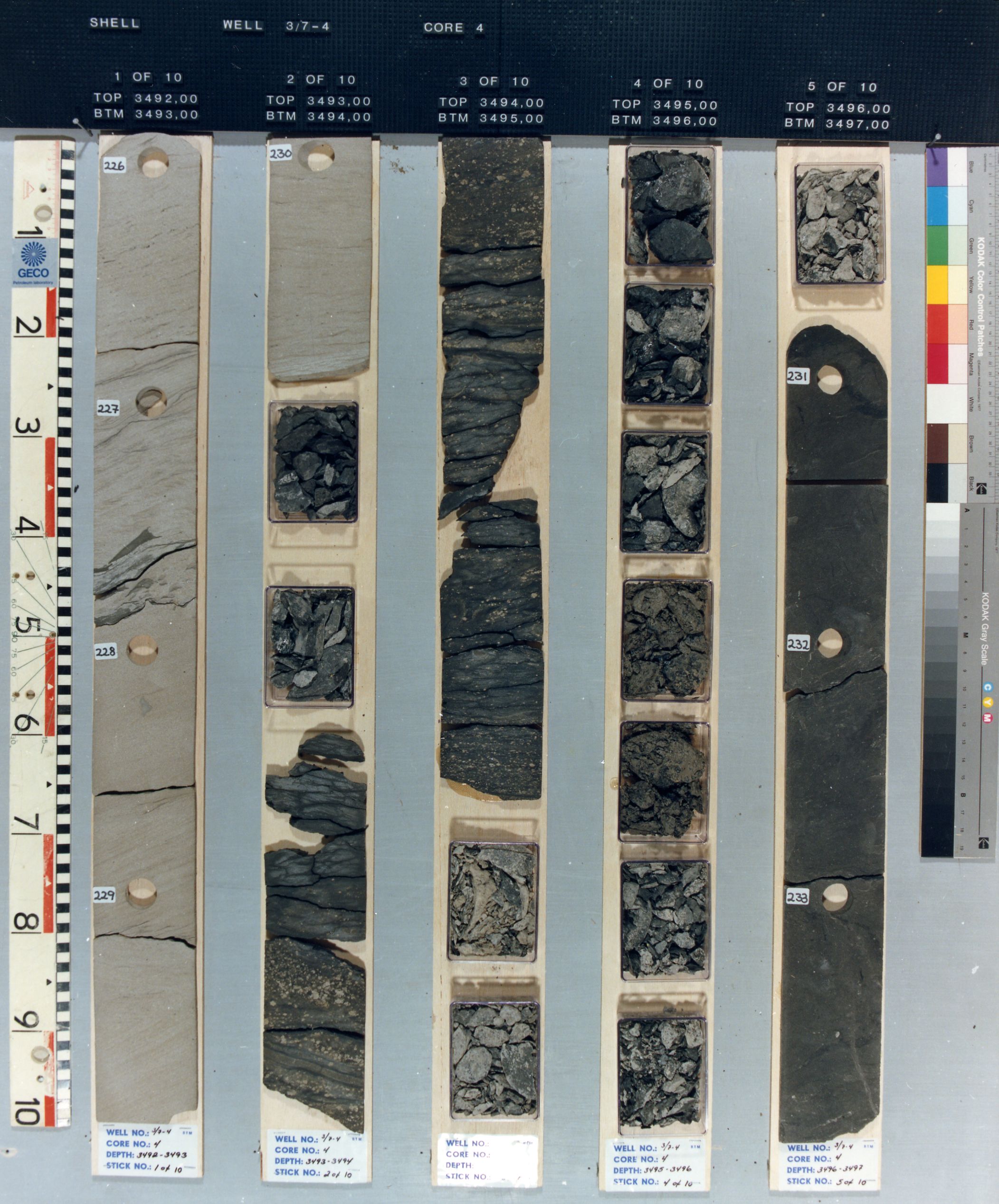
 3492-3497m3497-3501m3504-3509m3509-3514m3514-3519m


 3519-3524m3524-3525m3526-3531m3531-3536m3536-3541m


 3541-3546m3546-3551m3551-3553m3553-3558m3558-3563m


 3563-3568m3568-3573m3573-3574m
 -
Palynologiske preparater i Sokkeldirektoratet
Palynologiske preparater i Sokkeldirektoratet Prøve dybdeDybde enhetPrøve typeLaboratorie1980.0[m]DCRRI1980.0[m]DCAMOCO2010.0[m]DCRRI2010.0[m]DCAMOCO2040.0[m]DCRRI2040.0[m]DCAMOCO2070.0[m]DCRRI2070.0[m]DCAMOCO2080.0[m]DCRRI2090.0[m]DCRRI2100.0[m]DCRRI2100.0[m]DCAMOCO2120.0[m]DCRRI2130.0[m]DCRRI2130.0[m]DCAMOCO2140.0[m]DCRRI2160.0[m]DCRRI2160.0[m]DCAMOCO2170.0[m]DCRRI2180.0[m]DCRRI2190.0[m]DCRRI2190.0[m]DCAMOCO2200.0[m]DCRRI2210.0[m]DCRRI2220.0[m]DCRRI2220.0[m]DCAMOCO2240.0[m]DCRRI2250.0[m]DCRRI2250.0[m]DCAMOCO2260.0[m]DCRRI2280.0[m]DCRRI2280.0[m]DCAMOCO2290.0[m]DCRRI2300.0[m]DCRRI2310.0[m]DCRRI2310.0[m]DCAMOCO2320.0[m]DCRRI2330.0[m]DCRRI2340.0[m]DCRRI2340.0[m]DCAMOCO2360.0[m]DCRRI2370.0[m]DCRRI2370.0[m]DCAMOCO2380.0[m]DCRRI2400.0[m]DCRRI2400.0[m]DCRRI2400.0[m]DCRRI2410.0[m]DCRRI2420.0[m]DCRRI2430.0[m]DCRRI2430.0[m]DCAMOCO2440.0[m]DCRRI2450.0[m]DCRRI2460.0[m]DCRRI2460.0[m]DCAMOCO2480.0[m]DCRRI2490.0[m]DCRRI2490.0[m]DCAMOCO2500.0[m]DCRRI2520.0[m]DCRRI2520.0[m]DCAMOCO2540.0[m]DCRRI2550.0[m]DCRRI2550.0[m]DCAMOCO2560.0[m]DCRRI2570.0[m]DCRRI2580.0[m]DCRRI2580.0[m]DCAMOCO2600.0[m]DCRRI2610.0[m]DCRRI2610.0[m]DCAMOCO2620.0[m]DCRRI2640.0[m]DCRRI2640.0[m]DCAMOCO2650.0[m]DCRRI2660.0[m]DCRRI2670.0[m]DCRRI2670.0[m]DCAMOCO2680.0[m]DCRRI2690.0[m]DCRRI2700.0[m]DCRRI2700.0[m]DCAMOCO2710.0[m]DCRRI2720.0[m]DCRRI2730.0[m]DCRRI2740.0[m]DCRRI2750.0[m]DCRRI2760.0[m]DCRRI2770.0[m]DCRRI2780.0[m]DCRRI2780.0[m]DCRRI2790.0[m]DCRRI2790.0[m]DCAMOCO2800.0[m]DCRRI2800.0[m]DCAMOCO2810.0[m]DCRRI2810.0[m]DCAMOCO2820.0[m]DCRRI2820.0[m]DCAMOCO2830.0[m]DCRRI2830.0[m]DCAMOCO2840.0[m]DCRRI2840.0[m]DCAMOCO2850.0[m]DCRRI2850.0[m]DCAMOCO2860.0[m]DCRRI2860.0[m]DCAMOCO2880.0[m]DCRRI2890.0[m]DCRRI2900.0[m]DCRRI2920.0[m]DCRRI2930.0[m]DCRRI2940.0[m]DCRRI2960.0[m]DCRRI2970.0[m]DCRRI2980.0[m]DCRRI3000.0[m]DCRRI3382.2[m]CAPT3417.0[m]CAPT3426.0[m]CAPT3428.0[m]CAPT3430.0[m]CAPT3432.0[m]CAPT3434.0[m]CAPT3436.0[m]CAPT3438.0[m]CAPT3440.0[m]CAPT3440.9[m]CAPT3441.9[m]CAPT3442.3[m]CAPT3446.4[m]CAPT3447.1[m]CAPT3447.9[m]CAPT3448.2[m]CAPT3448.2[m]CAPT3450.5[m]CAPT3451.8[m]CAPT3459.2[m]CAPT3459.4[m]CAPT3459.5[m]CAPT3463.4[m]CAPT3464.4[m]CAPT3466.0[m]CAPT3467.8[m]CAPT3469.0[m]CAPT3469.3[m]CAPT3471.0[m]CAPT3471.8[m]CAPT3473.4[m]CAPT3475.8[m]CAPT3476.0[m]CAPT3480.8[m]CAPT3486.5[m]CAPT3495.5[m]CAPT3497.8[m]CAPT3498.4[m]CAPT3507.5[m]CAPT3509.1[m]CAPT3511.2[m]CAPT3513.1[m]CAPT3514.8[m]CAPT3516.8[m]CAPT3519.4[m]CAPT3522.6[m]CAPT3527.7[m]CAPT3534.0[m]CAPT3539.7[m]CAPT3541.3[m]CAPT3551.6[m]CAPT3552.5[m]CAPT3554.0[m]CAPT3554.0[m]CAPT3558.5[m]CAPT3559.5[m]CAPT3563.0[m]CAPT3563.5[m]CAPT3568.0[m]CAPT3568.0[m]CAPT3568.2[m]CAPT3574.3[m]CAPT -
Oljeprøver i Sokkeldirektoratet
Oljeprøver i Sokkeldirektoratet Test typeFlaske nummerTopp dyp
MD [m]Bunn dyp
MD [m]Væske typeTest tidspunktPrøver tilgjengeligDSTDST1A3440.003537.0001.01.1990 - 00:00YESDSTDST1B3470.003440.0003.01.1990 - 00:00YES -
Litostratigrafi
Litostratigrafi Topp Dyb [mMD RKB]Litostrat. enhet911412274727472766278728192848284829223088324732473255326132613411341134743688 -
Geokjemisk informasjon
Geokjemisk informasjon Dokument navnDokument formatDokumentstørrelse [MB].pdf5.53 -
Dokumenter – eldre Sokkeldirektoratets WDSS rapporter og andre relaterte dokumenter
Dokumenter – eldre Sokkeldirektoratets WDSS rapporter og andre relaterte dokumenter Dokument navnDokument formatDokumentstørrelse [MB].pdf0.27.pdf0.20 -
Dokumenter – rapportert av utvinningstillatelsen (Frigitt i henhold til regelverk)
Dokumenter – rapportert av utvinningstillatelsen (Frigitt i henhold til regelverk) Dokument navnDokument formatDokumentstørrelse [MB].pdf48.76 -
Borestrengtester (DST)
Borestrengtester (DST) Test nummerFra dybde MD
[m]Til dybde MD
[m]Reduksjonsventil størrelse
[mm]1.03473353719.02.03440347319.0Borestrengtester (DST) Test nummerEndelig avstengningstrykk
[MPa]Endelig strømningstrykk
[MPa]Bunnhullstrykk
[MPa]Borehullstemperatur
[°C]1.01312.0131Borestrengtester (DST) Test nummerOlje produksjon
[Sm3/dag]Gass produksjon
[Sm3/dag]Oljetetthet
[g/cm3]Gasstyngde rel. luftGOR
[m3/m3]1.06658844500.8040.72013302.06118382920.7960.7201372 -
Logger
Logger Type loggTopp dyp for logg [m]Bunn dyp for logg [m]CBL VDL CCL GR922092CBL VDL CCL GR18902400CBL VDL CCL GR31863636CDL CNL SPL CAL33703723CND CNL DISL GR CAL5752103CND CNL SPL CAL20923470DIFL AC GR180619DIFL AC SP GR20703502DIFL AC SP GR33823722DIFL AC SP GR CAL5452108DIPLOG GR31503469DIPLOG GR33933722DLL MLL CAL GR33823721DLL MLL GR20913470FMT GR28253260FMT GR34153684FMT GR34433443GYRO MULTISHOT922055GYRO MULTISHOT20553640MWD - GR RES DIR1873603PLT GR34303549SWS GR6272088SWS GR34043707VSP27003723 -
Foringsrør og formasjonsstyrketester
Foringsrør og formasjonsstyrketester Type utforingUtforing diam.
[tommer]Utforing dybde
[m]Brønnbane diam.
[tommer]Brønnbane dyp
[m]LOT/FIT slam eqv.
[g/cm3]Type formasjonstestCONDUCTOR30177.036187.00.00LOTINTERM.20610.026622.01.86LOTINTERM.20611.026622.01.86LOTINTERM.13 3/82093.017 1/22110.01.88LOTINTERM.9 5/83383.012 1/43603.01.95LOTLINER73710.08 3/83723.00.00LOT -
Boreslam
Boreslam Dybde MD [m]Egenvekt, slam [g/cm3]Viskositet, slam [mPa.s]Flytegrense [Pa]Type slamDato, måling1871.07WATER BASED3461.07WATER BASED6221.3250.0WATER BASED10111.3454.0WATER BASED11821.3356.0WATER BASED13631.3353.0WATER BASED16491.3365.0WATER BASED21101.5062.0WATER BASED24501.5053.0WATER BASED28891.5253.0WATER BASED30681.5045.0WATER BASED32561.5240.0WATER BASED33901.5646.0WATER BASED34051.5548.0WATER BASED34161.5538.0WATER BASED35061.5540.0WATER BASED35711.5540.0WATER BASED37231.5353.0WATER BASED37251.5448.0WATER BASED -
Trykkplott
Trykkplott Porertrykksdataene kommer fra logging i brønnen hvis ingen annen kilde er oppgitt. I noen brønner der trykk ikke er logget, er det brukt informasjon fra formasjonstester eller brønnspark. Trykkdataene er rapportert inn til Oljedirektoratet og videre prosessert og kvalitetssikret av IHS Markit.Trykkplott Dokument navnDokument formatDokumentstørrelse [MB].pdf0.22